

You don’t need a physical office, a large team, or thousands of dollars to start a business. With a laptop, an internet connection, and the right skills, you can build an online business from the comfort of your home.
The challenge is choosing the right opportunity. A quick search for business ideas online for home brings up hundreds of suggestions, but not every idea is practical, affordable, or suitable for beginners. Some require technical skills, while others need an initial investment or time to build an audience.
The good news is that there are plenty of ways to earn money online, whether you enjoy writing, designing, teaching, selling products, or helping other businesses. You can even start with a simple service and expand as your experience and customer base grow.
In this guide, you’ll discover 35 online business ideas you can start from home in 2026. Each idea includes how the business works, how to get started, the skills and tools you’ll need, estimated startup costs, and practical tips to help you take your first steps.
Let’s explore the opportunities and find the right online business for you.
How to Choose the Right Online Business Idea
Choosing a business idea is one of the most important decisions you’ll make as an entrepreneur. Instead of following every new trend, focus on an opportunity that matches your abilities, interests, budget, and customer demand.
Here are six factors to consider before getting started.
1. Identify Your Skills
Start by identifying what you already know how to do. Skills such as writing, graphic design, web development, teaching, marketing, and communication can become valuable online services.
You don’t need to be an expert in everything. Choose an idea that uses your existing abilities and allows you to improve as you gain experience.
2. Consider Your Interests
Running a business requires consistency, especially during the early stages when results may be slow. Choosing something you genuinely enjoy can make it easier to stay motivated.
For example, someone who enjoys photography might sell stock images, while someone interested in education could offer online tutoring.
3. Set a Realistic Starting Budget
Different online businesses require different levels of investment. Freelance writing and virtual assistance can often be started with equipment you already own, while e-commerce businesses may require inventory, packaging, and shipping expenses.
Decide how much you can comfortably invest without putting your personal finances at risk.
4. Research Market Demand
A good business idea solves a problem people are already willing to pay to solve.
Research your potential customers, examine competing businesses, explore online marketplaces, and read customer reviews. Look for common complaints or unmet needs that your business could address.
The U.S. Small Business Administration’s market research guide provides useful guidance on understanding customers and competitors.
5. Understand Your Competition
Competition isn’t necessarily a bad sign. It often shows that customers are already spending money in a particular market.
Study what other businesses offer, how they price their services, and what customers appreciate or dislike. Then identify a way to make your offer different.
You could focus on a specific audience, provide better customer support, offer faster delivery, or specialize in one service.
6. Evaluate Profit Potential
Revenue and profit are not the same thing. A business may generate substantial sales but still earn little after expenses.
Before choosing an idea, calculate its potential costs, including software, advertising, platform fees, inventory, payment processing, and taxes.
A simple tip: Write down three business ideas and compare their startup costs, demand, skills, and potential profit. Start with the one that offers the best balance of opportunity and affordability.
35 Best Online Business Ideas to Start From Home
You don’t need to launch a complicated company to become an entrepreneur. Many successful online businesses begin with one product, one service, or a small group of customers.
Below are 35 online business ideas, including service-based businesses, e-commerce opportunities, creative ventures, and digital products.
Note: All startup cost estimates in this article are approximate amounts in U.S. dollars (USD). Actual expenses vary depending on your country, equipment, software, platform fees, and business model. They are planning estimates, not guaranteed costs.
1. Start a Dropshipping Business
Dropshipping is an e-commerce business model in which you sell products without storing inventory yourself. When a customer places an order, your supplier prepares and ships the product directly to them.
Your main responsibilities are choosing products, managing your online store, attracting customers, and providing customer support.

How to get started:
- Choose a specific product category, such as home accessories, fitness equipment, or pet supplies.
- Research products with consistent customer demand.
- Find reliable suppliers and check their shipping times.
- Create an online store using Shopify or WooCommerce.
- Promote your products through SEO, social media, or paid advertising.
Skills and tools: Product research, marketing, customer service, Shopify, WooCommerce, and supplier platforms.
Estimated startup cost: $50–$500.
How you make money: You earn the difference between the selling price and the combined product, shipping, and operating costs.
Beginner tip: Order product samples before selling them. This helps you check quality, packaging, and delivery times before customers experience problems.
2. Start an E-commerce Store
An e-commerce store allows you to sell physical products through your own website. You can manufacture products, purchase wholesale inventory, or build a brand around products sourced from suppliers.
Unlike dropshipping, you generally manage your own inventory and fulfillment arrangements.
How to get started:
- Choose a product category that interests you.
- Research customer demand and competitors.
- Find manufacturers or wholesale suppliers.
- Create an online store.
- Photograph your products and write detailed descriptions.
- Set up payment, shipping, and customer service processes.
Skills and tools: Product research, branding, photography, inventory management, Shopify, WooCommerce, or Wix.
Estimated startup cost: $300–$3,000.
How you make money: You earn revenue from product sales after deducting inventory, packaging, shipping, marketing, and other expenses.
Beginner tip: Start with a small collection of products rather than purchasing large amounts of inventory. Expand your product range after identifying what customers actually buy.
3. Sell Digital Products
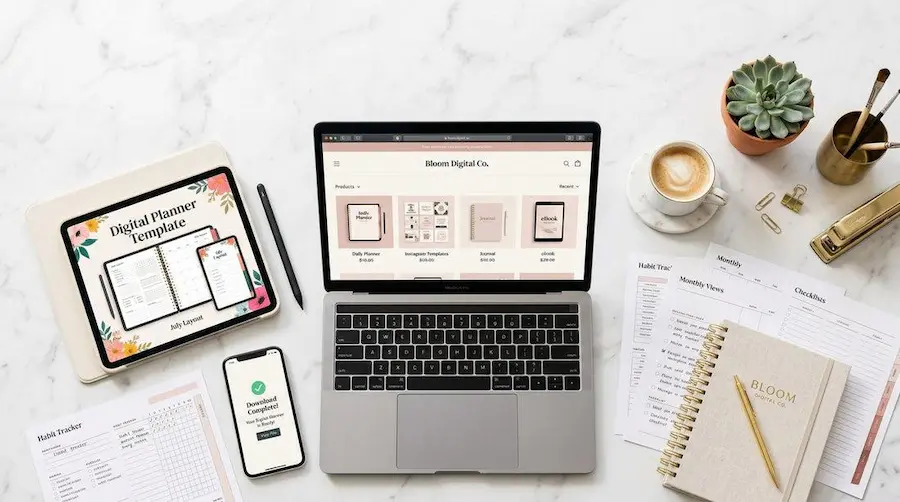
Digital products are downloadable or electronically delivered items that customers can purchase online. Examples include e-books, templates, planners, spreadsheets, printable artwork, and educational resources.
This business is attractive because you can create a product once and sell additional copies without physically packaging or shipping each order.
How to get started:
- Identify a problem your target audience wants to solve.
- Choose a digital product that addresses that problem.
- Create it using Canva, Google Docs, or other design tools.
- List it on Etsy, Gumroad, or your own website.
- Promote it through content marketing and social media.
Skills and tools: Writing, design, research, Canva, Google Docs, Etsy, and Gumroad.
Estimated startup cost: $0–$100.
How you make money: Customers pay to download or access your digital products.
Beginner tip: Start with one useful product, such as a monthly budget planner or social media content calendar. Improve it using customer feedback before creating more products.
Sell E-books
If you have knowledge about a particular subject, you can turn it into an e-book. Topics might include personal finance, cooking, fitness, business, or educational guides.
Create a useful, well-organized book and sell it through your website or digital marketplaces.
Create Digital Templates
Businesses, freelancers, and students regularly use templates to save time. You can create resume templates, business planners, presentation layouts, invoices, and social media designs.
Sell Online Planners and Printables
Printable products include calendars, habit trackers, study planners, checklists, and worksheets. Design them once and offer them as downloadable files.
4. Start Affiliate Marketing
Affiliate marketing allows you to earn commissions by recommending other companies’ products or services. When someone purchases through your unique affiliate link, you receive a commission according to the program’s terms.
You don’t need to manufacture products, manage inventory, or handle shipping.
How to get started:
- Choose a niche, such as technology, fitness, education, or personal finance.
- Find affiliate programs relevant to your audience.
- Create a blog, website, YouTube channel, or social media account.
- Publish useful product reviews, tutorials, and comparisons.
- Include relevant affiliate links and clearly disclose your relationship with the companies.
Skills and tools: Content writing, SEO, product research, WordPress, analytics, and affiliate networks.
Estimated startup cost: $0–$150.
How you make money: You receive commissions for qualifying purchases, leads, or other actions defined by the affiliate program.
Beginner tip: Focus on honest recommendations and products that genuinely help your audience. Trust is more valuable than publishing dozens of low-quality promotional articles.

5. Become a Freelance Content Writer
Businesses need written content to communicate with customers, attract website visitors, and explain their products. Freelance content writers create blog posts, website pages, product descriptions, newsletters, and other marketing materials.
This is a practical home-based business for people who enjoy research and writing.
How to get started:
- Choose a writing niche, such as business, technology, health, or education.
- Create three to five writing samples.
- Build a simple online portfolio.
- Create profiles on freelance platforms.
- Contact website owners, agencies, and businesses that need content.
Skills and tools: Writing, editing, research, Google Docs, Grammarly, and WordPress.
Estimated startup cost: $0–$50.
How you make money: Charge clients per word, article, project, or monthly content package.
Beginner tip: Specializing in a subject can help you develop expertise and stand out from general writers. Prioritize accurate research, original insights, and clear writing.
6. Start a Blogging Business
Blogging is an online business where you publish useful articles around a specific subject. You can build an audience and monetize your website through advertising, affiliate marketing, sponsored content, and your own products.
Although blogging usually takes time to generate meaningful traffic, it can become a long-term digital asset.
How to get started:
- Choose a niche with a clear audience.
- Purchase a domain and hosting.
- Build your website using WordPress.
- Research relevant keywords and search intent.
- Publish helpful, original articles consistently.
- Build an audience through search engines, email, and social media.
Skills and tools: Writing, SEO, content research, WordPress, Google Search Console, and Google Analytics.
Estimated startup cost: $50–$200 per year for a basic setup.
How you make money: Display advertisements, affiliate commissions, sponsored posts, digital products, and services.
Beginner tip: Don’t expect immediate income. Focus on publishing genuinely helpful content and building topical expertise before prioritizing monetization.
7. Become a Virtual Assistant
A virtual assistant provides administrative and organizational support to businesses and independent professionals remotely.
Typical tasks include managing emails, scheduling appointments, organizing documents, researching information, and updating spreadsheets.
How to get started:
- Identify the administrative tasks you can perform.
- Choose a target audience, such as coaches, consultants, or small business owners.
- Create a simple list of services and prices.
- Build a professional profile or portfolio.
- Contact potential clients through professional networks and freelance platforms.
Skills and tools: Communication, organization, time management, Google Workspace, Trello, and Zoom.
Estimated startup cost: $0–$50.
How you make money: Charge hourly rates or monthly packages based on the tasks and time required.
Beginner tip: Start with two or three clearly defined services. Once you gain experience, you can specialize in areas such as executive assistance, e-commerce support, or project coordination.
8. Offer Social Media Management Services
Many businesses understand the importance of social media but don’t have enough time to manage their accounts consistently. A social media manager helps businesses plan, create, publish, and monitor content.
You can work with local companies, online stores, personal brands, or service providers.
How to get started:
- Learn how platforms such as Instagram, Facebook, LinkedIn, and TikTok work.
- Choose an industry or audience to serve.
- Create sample posts and a content calendar.
- Develop service packages.
- Approach businesses that need help managing their social accounts.
Skills and tools: Content creation, copywriting, analytics, Canva, Buffer, and Meta Business Suite.
Estimated startup cost: $0–$100.
How you make money: Monthly management retainers, content packages, or project-based fees.
Beginner tip: Build a sample social media calendar for a business in your chosen niche. Show how your content can support its marketing goals rather than focusing only on follower growth.
9. Start a Web Design Business
Web designers create websites for businesses, freelancers, organizations, and individuals. You can help customers build new websites or improve existing ones.
You don’t necessarily need advanced programming knowledge to get started because website builders make many design tasks easier.
How to get started:
- Learn WordPress, Webflow, or another website builder.
- Understand basic design principles and user experience.
- Build two or three demonstration websites.
- Create a portfolio.
- Offer website design and maintenance services.
Skills and tools: Layout design, typography, responsive design, WordPress, Webflow, and Figma.
Estimated startup cost: $50–$300.
How you make money: Website development projects, redesigns, maintenance packages, and ongoing support.
Beginner tip: Start with simple websites for small businesses. Offer maintenance as an additional service to build recurring revenue.
10. Offer SEO Services
Search engine optimization (SEO) helps businesses improve their visibility in organic search results. SEO professionals work on keyword research, content optimization, website structure, technical issues, and link-related strategies.
Businesses often hire SEO specialists because improving organic visibility requires ongoing work.
How to get started:
- Learn keyword research and search intent.
- Understand on-page and technical SEO.
- Practice by optimizing your own website or a demonstration project.
- Create sample audits and reports.
- Offer specific services to small businesses and website owners.
Skills and tools: SEO research, analytics, content optimization, Google Search Console, Ahrefs, and Semrush.
Estimated startup cost: $0–$200 initially, with additional expenses for paid tools if needed.
How you make money: Charge for SEO audits, keyword research, content optimization, technical fixes, or monthly retainers.
Beginner tip: Never guarantee first-page rankings. Offer a transparent strategy, measurable deliverables, and regular reporting instead.
11. Start a Graphic Design Business
Graphic designers create visual materials that help businesses communicate their brands and messages. These materials include logos, social media graphics, advertisements, brochures, presentations, and packaging designs.
You can run this business entirely online and work with clients from different industries.
How to get started:
- Learn fundamental design principles.
- Practice with Canva, Figma, or Adobe Illustrator.
- Create sample projects for your portfolio.
- Choose the types of design services you want to offer.
- Promote your work through a portfolio website and professional platforms.
Skills and tools: Typography, color theory, layout, Canva, Figma, and Adobe Illustrator.
Estimated startup cost: $0–$300.
How you make money: Charge per design, project, branding package, or monthly creative retainer.
Beginner tip: Choose a specialty, such as social media graphics or brand identity design. Use written agreements that clearly explain deliverables and revisions.
12. Become an Online Tutor
Online tutoring allows you to teach students through video calls and digital learning platforms. You can offer lessons in school subjects, languages, mathematics, music, or professional skills.
This is a suitable home business if you have strong knowledge of a subject and enjoy helping others learn.

How to get started:
- Choose the subject and student level you want to teach.
- Prepare lesson plans and sample materials.
- Set your hourly or package pricing.
- Create a tutoring profile.
- Promote your services through education communities and online platforms.
Skills and tools: Subject knowledge, communication, teaching, Zoom, Google Meet, and digital whiteboards.
Estimated startup cost: $0–$100.
How you make money: Charge per lesson, hour, or learning package.
Beginner tip: Offer a short introductory session to understand a student’s needs and demonstrate your teaching approach.
13. Create and Sell Online Courses
If you have expertise in a particular subject, you can turn that knowledge into an online course. Courses can include recorded lessons, downloadable resources, quizzes, and assignments.
Popular subjects include digital marketing, programming, graphic design, language learning, and business management.
How to get started:
- Identify a skill people want to learn.
- Research existing courses and customer feedback.
- Divide your subject into manageable lessons.
- Record videos or create written learning materials.
- Publish the course on a suitable platform.
- Promote it through your website, email list, or social media.
Skills and tools: Subject expertise, teaching, video recording, Teachable, Udemy, and a good microphone.
Estimated startup cost: $100–$600.
How you make money: Course purchases, memberships, and additional coaching services.
Beginner tip: Validate demand before recording an entire course. You can start with a live workshop or a small paid training session.
14. Start a YouTube Channel
YouTube gives creators an opportunity to build an audience by publishing videos around subjects they understand or enjoy.
You can create educational tutorials, product reviews, entertainment videos, business content, or lifestyle videos.
How to get started:
- Choose a specific channel topic.
- Research what your target audience wants to watch.
- Plan your first ten video ideas.
- Record and edit videos using equipment you already own.
- Publish consistently and study audience retention.
- Explore monetization opportunities when eligible.
Skills and tools: Storytelling, presentation, video editing, YouTube Studio, CapCut, and DaVinci Resolve.
Estimated startup cost: $0–$300.
How you make money: Advertising revenue after meeting YouTube’s eligibility requirements, sponsorships, affiliate links, memberships, and product sales.
Beginner tip: Focus on helping a specific audience instead of uploading unrelated videos. Improve your titles, thumbnails, and video quality over time.
15. Become a Social Media Influencer
Social media influencers create content and build an audience around a particular interest, lifestyle, or area of expertise.
You can focus on technology, fitness, fashion, education, travel, food, or entrepreneurship.
How to get started:
- Select a niche and target audience.
- Choose one or two social platforms.
- Develop a recognizable content style.
- Publish useful and engaging posts regularly.
- Build relationships with your followers.
- Create a media kit when approaching potential brand partners.
Skills and tools: Communication, storytelling, content creation, photography, and video editing.
Estimated startup cost: $0–$200.
How you make money: Brand partnerships, sponsored posts, affiliate marketing, subscriptions, and your own products.
Beginner tip: Focus on audience trust rather than follower count. A smaller, engaged audience can be more valuable to a relevant brand than a large, inactive one.
16. Start a Print-on-Demand Business
Print-on-demand allows you to sell customized products without purchasing inventory in advance. Products such as T-shirts, mugs, hoodies, posters, and phone cases are printed and shipped by a fulfillment partner after an order is placed.
How to get started:
- Choose a target audience or design niche.
- Create original product designs.
- Connect a print-on-demand provider to your online store.
- Upload designs and create product listings.
- Order samples and check product quality.
- Promote your products through online channels.
Skills and tools: Graphic design, product research, Canva, Printful, Printify, Etsy, and Shopify.
Estimated startup cost: $0–$200.
How you make money: Earn the difference between your selling price and production, fulfillment, platform, and marketing costs.
Beginner tip: Design for a specific audience instead of creating generic products. Always check copyright and trademark restrictions before selling designs.
17. Sell Handmade Products Online
If you enjoy making things by hand, you can turn your creativity into an online business. Handmade products include jewelry, candles, artwork, soaps, home decorations, accessories, and personalized gifts.
How to get started:
- Choose products you can make consistently.
- Research customer preferences and competitors.
- Calculate material and labor costs.
- Photograph your products professionally.
- Create an online shop.
- Promote your products through social media and relevant marketplaces.
Skills and tools: Craftsmanship, product photography, pricing, packaging, Etsy, and Canva.
Estimated startup cost: $100–$800.
How you make money: Product sales, custom orders, gift collections, and limited-edition releases.
Beginner tip: Start with a small product collection and calculate the value of your time when setting prices.
For marketplace guidance, explore the official Etsy Seller Handbook.
18. Start a Subscription Box Business
A subscription box business delivers a collection of products to customers on a recurring schedule, usually monthly or quarterly.
You could create boxes around skincare, books, snacks, stationery, hobbies, or pet accessories.
How to get started:
- Choose a specific subscription theme.
- Research the audience and its interests.
- Find suppliers and calculate product costs.
- Create a sample subscription box.
- Set up recurring payments.
- Promote your offer and collect initial subscribers.
Skills and tools: Product sourcing, branding, packaging, logistics, Shopify, and subscription management software.
Estimated startup cost: $500–$3,000.
How you make money: Recurring subscription payments and optional additional product sales.
Beginner tip: Test your concept with a small group of customers before purchasing large quantities of inventory.
19. Become an Online Bookkeeper
Bookkeepers help businesses maintain accurate financial records. Their responsibilities may include recording transactions, organizing expenses, reconciling accounts, and preparing financial reports.
Many small businesses outsource these tasks to remote professionals.
How to get started:
- Learn basic accounting and bookkeeping principles.
- Become familiar with bookkeeping software.
- Practice with sample transactions.
- Choose a target customer group.
- Create clear service packages.
- Build relationships with small businesses and freelancers.
Skills and tools: Attention to detail, accounting knowledge, QuickBooks, Xero, and spreadsheets.
Estimated startup cost: $100–$500.
How you make money: Monthly bookkeeping packages, hourly fees, or project-based services.
Beginner tip: Protect financial information and use written confidentiality agreements. Only offer services that match your training and qualifications.
20. Offer Freelance Video Editing
Video editing is a valuable online service because creators, businesses, educators, and marketers regularly need edited videos.
You can edit YouTube videos, advertisements, online courses, podcasts, and short-form social media content.
How to get started:
- Learn video editing software.
- Practice with sample footage.
- Create a portfolio or showreel.
- Choose a specialty, such as short-form or long-form editing.
- Contact creators and businesses that publish videos regularly.
Skills and tools: Editing, storytelling, pacing, CapCut, DaVinci Resolve, and Adobe Premiere Pro.
Estimated startup cost: $0–$500, depending on your existing computer and software.
How you make money: Charge per video, editing project, or monthly package.
Beginner tip: Create before-and-after samples to demonstrate how your editing improves the viewing experience.
21. Start a Podcast Editing Business
Podcasters often need assistance cleaning audio, removing mistakes, adjusting sound levels, adding introductions, and preparing episodes for publication.
If you understand audio editing, you can provide these services remotely.
How to get started:
- Learn basic audio editing techniques.
- Practice using sample recordings.
- Create before-and-after audio examples.
- Choose your services and pricing.
- Contact independent podcasters and production companies.
Skills and tools: Audio editing, listening, communication, Audacity, Descript, and Adobe Audition.
Estimated startup cost: $0–$200.
How you make money: Charge per episode, monthly editing package, or additional services such as show notes and social media clips.
Beginner tip: Offer a complete podcast editing package to clients who want a reliable, ongoing service.
22. Offer Translation Services
If you are fluent in two or more languages, translation can become a home-based business. Companies, publishers, and individuals need translations for documents, websites, product descriptions, and subtitles.
How to get started:
- Identify the languages you can translate accurately.
- Choose a specialization, such as business, education, or technical content.
- Prepare translation samples.
- Create a professional portfolio.
- Join freelance platforms and contact potential clients.
Skills and tools: Language proficiency, writing, research, proofreading, and computer-assisted translation tools.
Estimated startup cost: $0–$200.
How you make money: Charge per word, page, project, or ongoing contract.
Beginner tip: Specialize in subjects you understand well. Do not accept legal, medical, or technical assignments beyond your qualifications.
23. Become a Resume and CV Writer
Job seekers often need help creating professional resumes and CVs that communicate their skills and experience effectively.
A resume-writing business helps clients improve their professional profiles, cover letters, and LinkedIn summaries.
How to get started:
- Study current resume formats and hiring practices.
- Create sample resumes for different industries.
- Develop service packages.
- Build a portfolio.
- Promote your services through professional communities and freelance platforms.
Skills and tools: Writing, editing, communication, Google Docs, Canva, and LinkedIn.
Estimated startup cost: $0–$100.
How you make money: Charge for resume writing, CV redesign, cover letters, and LinkedIn profile optimization.
Beginner tip: Interview clients about their achievements and measurable results. Strong resumes communicate accomplishments rather than simply listing job responsibilities.
24. Start an Online Consulting Business
Consultants provide professional advice and solutions to businesses or individuals. You can specialize in marketing, operations, management, technology, human resources, or another area where you have genuine expertise.
How to get started:
- Identify a problem you can solve.
- Select a specific target audience.
- Define your consulting services.
- Create a professional website or portfolio.
- Publish useful content demonstrating your expertise.
- Arrange consultations through video calls.
Skills and tools: Industry expertise, communication, problem-solving, Zoom, scheduling software, and presentation tools.
Estimated startup cost: $50–$300.
How you make money: Hourly consultations, project fees, strategy sessions, or ongoing retainers.
Beginner tip: Focus on a specific business outcome rather than offering vague advice. Clearly explain what clients receive.
25. Become an Online Fitness Coach
An online fitness coach helps clients follow workout plans and develop healthier exercise routines remotely.
You can offer one-to-one coaching, group sessions, workout programs, or accountability packages.
How to get started:
- Obtain an appropriate fitness qualification.
- Choose a target audience or fitness specialty.
- Develop structured training programs.
- Create a professional coaching profile.
- Use video calls and fitness platforms to support clients.
Skills and tools: Fitness knowledge, communication, programming, video calls, and coaching software.
Estimated startup cost: $200–$1,000, depending on training and certification requirements.
How you make money: Monthly coaching packages, group programs, and personalized workout plans.
Beginner tip: Stay within your professional scope and avoid making medical claims. Refer clients with medical concerns to qualified healthcare professionals.
26. Sell Photography Online
Photography can become an online business if you create images that people and companies want to purchase.
You can sell stock photographs, digital downloads, prints, or image licensing rights.
How to get started:
- Choose a photography niche.
- Build a collection of high-quality images.
- Learn photo editing.
- Create a portfolio.
- Upload suitable images to stock photography platforms or sell through your website.
Skills and tools: Photography, composition, editing, Lightroom, and a capable camera or smartphone.
Estimated startup cost: $0–$1,000, depending on the equipment you already own.
How you make money: Stock image licensing, print sales, and commercial photography licenses.
Beginner tip: Research what customers are searching for. Business, lifestyle, education, and travel images can serve different commercial audiences.
27. Start a Virtual Event Planning Business
Businesses, organizations, and creators regularly organize online workshops, webinars, conferences, and networking events.
A virtual event planner helps coordinate these activities and ensures everything runs smoothly.
How to get started:
- Learn the basics of event planning.
- Choose a type of virtual event.
- Create an event checklist and planning process.
- Become familiar with online event platforms.
- Offer your services to businesses and independent creators.
Skills and tools: Organization, communication, project management, Zoom, Webex, and Eventbrite.
Estimated startup cost: $50–$300.
How you make money: Event planning fees, coordination packages, and project-based contracts.
Beginner tip: Start by organizing a small online workshop. Use it as a practical example of your planning and coordination abilities.
28. Become an Online Personal Stylist
An online personal stylist helps customers choose outfits, coordinate clothing, and develop a personal style.
You can provide virtual consultations, wardrobe recommendations, shopping lists, and personalized style guides.
How to get started:
- Learn about fashion, colors, and outfit coordination.
- Choose your target audience.
- Create sample style guides.
- Set up a professional social media profile.
- Offer virtual consultations.
Skills and tools: Fashion knowledge, communication, styling, Canva, and Pinterest.
Estimated startup cost: $50–$300.
How you make money: Consultation fees, personalized style packages, digital guides, and affiliate commissions.
Beginner tip: Focus on a specific customer group, such as students, professionals, or people building a budget-friendly wardrobe.
29. Start an App Development Business
App development involves building software applications for mobile devices, websites, or businesses.
Companies may need apps for booking, customer management, online shopping, communication, and other business activities.
How to get started:
- Learn a programming language or app development framework.
- Choose a platform, such as Android, iOS, or web applications.
- Build small demonstration projects.
- Create a development portfolio.
- Contact businesses that need custom software.
Skills and tools: Programming, problem-solving, Flutter, React Native, GitHub, and development tools.
Estimated startup cost: $100–$1,000, depending on equipment and software.
How you make money: Client projects, maintenance contracts, subscriptions, or app sales.
Beginner tip: Start with small, clearly defined projects. Avoid accepting complicated projects before you understand the technical requirements.
30. Offer AI-Powered Services
Artificial intelligence tools have created opportunities for people who can help businesses automate tasks and improve their workflows.
You can offer services such as AI-assisted content workflows, chatbot setup, document organization, research support, and business process automation.

How to get started:
- Identify repetitive tasks businesses want to improve.
- Learn relevant AI and automation tools.
- Build a small demonstration project.
- Test the quality and reliability of your workflow.
- Offer your service to businesses with similar needs.
Skills and tools: AI literacy, prompt design, automation, research, ChatGPT, and Zapier.
Estimated startup cost: $20–$200 per month, depending on the tools and subscriptions used.
How you make money: Charge for setup projects, workflow automation, consulting, or ongoing maintenance.
Beginner tip: Sell a practical solution rather than simply selling access to an AI tool. Review outputs carefully, protect customer information, and be transparent about how AI is used.
31. Start an Email Marketing Agency
Email marketing agencies help businesses communicate with customers through newsletters, promotional campaigns, and automated email sequences.
Businesses use email to introduce products, build customer relationships, and encourage repeat purchases.
How to get started:
- Learn email marketing fundamentals.
- Understand audience segmentation and consent.
- Practice writing email campaigns.
- Create sample welcome and promotional sequences.
- Approach online stores and service businesses.
Skills and tools: Copywriting, marketing strategy, analytics, Mailchimp, Klaviyo, and Kit.
Estimated startup cost: $0–$200.
How you make money: Monthly retainers, campaign fees, and email automation projects.
Beginner tip: Start with a specific service, such as welcome email sequences, before expanding into complete email marketing management.
32. Sell Products on Online Marketplaces
Online marketplaces allow sellers to reach customers without building an independent e-commerce website from scratch.
Depending on the platform and its rules, you can sell new products, used goods, collectibles, handmade items, or wholesale merchandise.
How to get started:
- Choose a suitable marketplace.
- Research products with customer demand.
- Compare supplier prices and marketplace fees.
- Create accurate product listings.
- Organize packaging, shipping, and customer service.
Skills and tools: Product research, pricing, photography, marketplace management, Amazon Seller Central, and eBay.
Estimated startup cost: $100–$1,500.
How you make money: Earn the difference between your selling price and the costs of sourcing, platform fees, shipping, and operations.
Beginner tip: Calculate all marketplace fees before purchasing inventory. Check seller policies, product restrictions, and fulfillment requirements.
33. Start a Website Flipping Business
Website flipping involves buying an existing website, improving it, and selling it for a higher price. You can also build a website from scratch and sell it after developing its content, audience, or revenue.
This business requires patience and a good understanding of how websites generate value.
How to get started:
- Learn website development and SEO.
- Understand website traffic and monetization.
- Research website marketplaces.
- Start by building a small niche website.
- Improve its content, performance, and user experience.
- Evaluate its performance before selling.
Skills and tools: SEO, content strategy, website management, analytics, WordPress, and domain research.
Estimated startup cost: $100–$1,000 or more, depending on whether you build or purchase a website.
How you make money: Sell websites for more than your total investment and operating costs.
Beginner tip: Carefully verify traffic, revenue, ownership, and operating expenses before purchasing an existing website.
34. Offer Online Customer Support
Many online businesses need remote workers to handle customer questions, complaints, returns, and order inquiries.
As a customer support provider, you can help businesses communicate with customers through email, live chat, or support ticket systems.
How to get started:
- Develop strong written and verbal communication skills.
- Learn basic customer service practices.
- Become familiar with support platforms.
- Create a professional profile.
- Apply for remote customer support contracts.
Skills and tools: Communication, patience, problem-solving, Zendesk, Intercom, and Help Scout.
Estimated startup cost: $0–$50, assuming you already have a suitable computer and internet connection.
How you make money: Hourly contracts, monthly agreements, or support packages.
Beginner tip: Practice responding to common customer questions professionally. Clear communication and reliability can help you build long-term client relationships.
35. Start a Digital Marketing Agency
A digital marketing agency helps businesses attract customers through online marketing channels. Services can include SEO, paid advertising, social media marketing, content creation, and email campaigns.
You can start independently with one core service and expand as your experience and client base grow.
How to get started:
- Choose a marketing specialty.
- Identify a target industry.
- Develop a clear service package.
- Create case studies or demonstration projects.
- Contact businesses that need marketing support.
- Build a reliable process for reporting and client communication.
Skills and tools: Marketing strategy, SEO, advertising, analytics, Google Ads, Meta Ads Manager, and CRM software.
Estimated startup cost: $100–$1,000.
How you make money: Monthly retainers, campaign management fees, consulting, and project-based services.
Beginner tip: Don’t try to offer every marketing service immediately. Start with one service you can deliver well, then expand when you have the experience and resources to manage additional work.
Best Online Business Ideas Based on Your Budget
Your budget can help determine which online business is most practical to start. Some businesses require little more than a computer and internet connection, while others need inventory, software, equipment, or professional training.
Here are some options based on different starting budgets.
Online Businesses You Can Start With No Money
If you already own a laptop or smartphone and have an internet connection, you can begin with service-based businesses.
Consider these options:
- Freelance content writing
- Virtual assistance
- Online tutoring
- Customer support
- Social media management
- Affiliate marketing
These businesses allow you to use your existing skills instead of investing in inventory.
Online Businesses Under $100
A small budget can be enough to test certain online business ideas.
Consider:
- Digital products
- Resume and CV writing
- Translation services
- Podcast editing
- Print-on-demand
You may need to spend money on a domain, design tools, or marketplace fees, but you can often start with free tools.
Online Businesses Under $500
With a larger starting budget, you can invest in better equipment, software, training, and website development.
Potential options include:
- Web design
- Graphic design
- Video editing
- Email marketing
- Online courses
- Bookkeeping
The exact cost depends on your existing skills and equipment.
Online Businesses With Higher Earning Potential
Some businesses can generate higher revenue as they develop specialized skills, strong customer relationships, and repeatable systems.
Examples include:
- Digital marketing agencies
- Online consulting
- App development
- E-commerce brands
- Website flipping
These businesses may have greater growth potential, but they can also require more experience, investment, and operational management.
Remember: A higher startup budget doesn’t guarantee higher profits. Choose a business based on demand, your capabilities, and realistic financial planning.
Best Online Business Ideas for Different Types of People
Not everyone has the same experience, schedule, or resources. The best online business for a student may be different from the best option for someone with years of professional experience.
Here are some ideas based on different circumstances.
Best Online Business Ideas for Beginners
If you’re new to entrepreneurship, choose a business with manageable startup costs and a simple service or product.
Good options include:
- Freelance writing
- Virtual assistance
- Digital products
- Online tutoring
- Social media management
These businesses can help you learn customer communication, pricing, marketing, and business operations.
Best Online Business Ideas for Students
Students often need flexible businesses that fit around classes and study schedules.
Consider:
- Online tutoring
- Freelance writing
- Graphic design
- Resume writing
- Print-on-demand
- Digital products
You can begin with a few customers and increase your workload as your schedule allows.
Best Online Business Ideas for Women
Women can pursue any of the business opportunities discussed in this article. The right choice depends on personal interests, skills, resources, and goals.
Some flexible options include:
- Handmade product businesses
- Virtual assistance
- Online consulting
- Personal styling
- Fitness coaching
- Digital products
These opportunities can be operated from home and adjusted around other personal or professional commitments.
Best Online Business Ideas for People Working From Home
If you already work remotely, you may have a suitable workspace, computer, and internet connection.
You could explore:
- Freelance video editing
- Online bookkeeping
- Consulting
- Customer support
- Content writing
- SEO services
Make sure any additional business activity complies with your employment agreement and doesn’t interfere with your main responsibilities.
Best Online Business Ideas for Part-Time Entrepreneurs
If you cannot dedicate full-time hours to a new business, consider opportunities that can be managed in smaller time blocks.
Good options include:
- Affiliate marketing
- Blogging
- Digital products
- Print-on-demand
- Freelance writing
- Online tutoring
Set a consistent weekly schedule and avoid taking on more customers or projects than you can handle.
How to Start an Online Business From Home in 7 Steps
Having a good business idea is only the beginning. You also need a practical plan to turn it into something customers can buy.
Follow these seven steps to start your online business.
1. Choose a Profitable Business Idea
Begin by selecting one idea that matches your skills, interests, budget, and customer demand.
Avoid trying to launch several unrelated businesses at once. Focus on one clear product or service and understand who is most likely to purchase it.
2. Research Your Market and Competitors
Find out who your potential customers are and what problems they want to solve.
Research competing businesses, their prices, services, customer reviews, and marketing strategies.
Look for opportunities to offer something more useful, convenient, specialized, or affordable.
3. Validate Your Business Idea
Before spending a lot of money, test whether customers are actually interested in your offer.
You can:
- Interview potential customers.
- Create a sample product.
- Offer a small paid service.
- Build a landing page.
- Test a limited product launch.
- Collect feedback from early customers.
Getting a few paying customers is stronger evidence of demand than receiving compliments from friends.
4. Create a Business Plan
A business plan helps you organize your goals, expenses, pricing, and marketing strategy.
Your initial plan doesn’t need to be complicated. Include:
- Business description
- Target audience
- Products or services
- Competitor analysis
- Startup expenses
- Pricing strategy
- Marketing channels
- Revenue and expense estimates
Review your plan regularly as you learn more about your customers.
5. Choose a Business Name and Register Your Business
Choose a name that is easy to remember, relevant to your services, and available for use.
Before launching, investigate the legal requirements that apply in your country or region. These may include business registration, tax obligations, licenses, permits, and consumer protection rules.
Business structures differ by jurisdiction. The U.S. Small Business Administration’s business structure guide explains common U.S. options. If you operate elsewhere, consult your local government or business registration authority.
6. Build Your Website and Online Presence
Your website gives potential customers a place to learn about your business, explore your products or services, and contact you.
Start with the essentials:
- A professional domain name
- A clear homepage
- Product or service pages
- An About page
- Contact information
- Privacy and relevant policy pages
You can use WordPress, Shopify, Wix, or another website builder depending on your business model.
Also choose relevant social media platforms where your target customers spend time.
7. Find Customers and Grow Your Business
Once your business is ready, focus on attracting your first customers.
You can use:
- Search engine optimization
- Social media marketing
- Email marketing
- Freelance marketplaces
- Direct outreach
- Referral programs
- Paid advertising
Pay attention to customer feedback, track your expenses, and improve your products or services.
A practical approach: Focus on getting your first few customers before investing heavily in advertising or expanding your business.
Tools You Need to Start an Online Business From Home
You don’t need dozens of subscriptions to run a successful online business. Start with a few tools that solve your immediate needs and add more as your business grows.
Here are five useful categories.
Website Building Tools
A website helps you present your business professionally and reach potential customers.
Popular options include:
- WordPress for blogs and flexible websites.
- Shopify for e-commerce stores.
- Wix for simple websites.
- Squarespace for portfolio and service websites.
Choose a platform based on your products, services, and technical requirements.
Marketing and SEO Tools
Marketing tools help you understand your audience, research keywords, and promote your business.
Useful options include:
- Google Search Console for monitoring search performance.
- Google Analytics for understanding website traffic.
- Ahrefs for SEO research.
- Semrush for keyword and competitor analysis.
- Mailchimp for email marketing.
Graphic Design Tools
Design tools help you create product images, presentations, social media posts, and marketing materials.
Consider:
- Canva for accessible graphic design.
- Figma for interface and collaborative design work.
- Adobe Illustrator for professional vector graphics.
- Adobe Photoshop for image editing.
Productivity and Automation Tools
Managing clients, deadlines, and daily tasks becomes easier with productivity software.
Useful options include:
- Trello for task management.
- Notion for notes and business organization.
- Asana for project management.
- Calendly for appointment scheduling.
- Zapier for connecting applications and automating repetitive workflows.
Payment and Business Management Tools
Payment and bookkeeping tools help you manage transactions, invoices, and financial records.
Depending on your country and business model, you may consider:
- Stripe
- PayPal
- QuickBooks
- Xero
- Wave
Important: Payment processing services aren’t available in every country. Check supported countries, fees, withdrawal methods, and business verification requirements before choosing a provider.
Pros and Cons of Starting an Online Business From Home
Running a business from home offers flexibility and convenience, but it also comes with responsibilities and challenges.
Understanding both sides can help you make a more informed decision.
Advantages of Running an Online Business
1. Lower startup costs
Many online businesses don’t require commercial rent, expensive equipment, or a large workforce.
2. Flexible working hours
You can often organize your schedule around personal responsibilities and other commitments.
3. Access to a wider audience
Depending on your business and payment arrangements, you can serve customers beyond your immediate location.
4. Opportunity to grow
You can gradually expand your products, services, customer base, and operations as demand increases.
5. Work from anywhere
Many digital businesses can operate from any location with a reliable internet connection.
Challenges of Running an Online Business
1. High competition
Popular online markets attract many sellers and service providers. You need a clear reason for customers to choose your business.
2. Unpredictable income
New businesses may experience inconsistent sales, especially during the early stages.
3. Self-management
Working from home requires discipline, time management, and the ability to stay focused.
4. Customer acquisition takes time
Finding customers requires consistent marketing, networking, and relationship building.
5. Dependence on digital platforms
Changes to platform policies, search algorithms, advertising costs, or account restrictions can affect your business.
An online business is not automatically easy or profitable. Success requires a useful offer, reliable delivery, customer trust, and consistent effort.
Final Thoughts
Starting an online business from home doesn’t have to be complicated. You can begin with a freelance service, sell a digital product, teach a skill, or build an online store. The best opportunity depends on what you can offer and what customers are willing to pay for.
If you’re a beginner with a limited budget, consider starting with freelance writing, virtual assistance, online tutoring, or social media management. These service-based businesses can help you gain experience without purchasing inventory.
If you prefer selling products, explore digital products, print-on-demand, dropshipping, or e-commerce. If you have specialized knowledge, consulting, online courses, and professional services may offer opportunities to build a more valuable business.
The most important step is to choose one idea, research its market, and test it with real customers. Start small, learn from feedback, and improve your offer as your business develops.
You don’t need to have everything figured out before starting. You need a practical idea, a clear plan, and the willingness to take the first step.
Frequently Asked Questions About Online Business Ideas
What Is the Best Online Business to Start From Home?
The best online business depends on your skills, budget, and interests. Freelance writing, virtual assistance, digital products, online tutoring, and affiliate marketing are popular options for beginners because they can often be started with relatively low investment.
Which Online Business Can I Start With No Money?
You can start several service-based businesses with little or no additional investment if you already have a computer and internet connection. Examples include freelance writing, virtual assistance, tutoring, translation, and customer support.
What Is the Most Profitable Online Business?
There is no single online business that guarantees the highest profit. Digital marketing agencies, consulting, software development, e-commerce, and specialized professional services can offer strong revenue opportunities.
How Can Beginners Start an Online Business?
Beginners should start by identifying their skills and selecting one business idea. Research the market, understand your customers, test your offer, and create a simple online presence.
Can I Run an Online Business From Home Without Experience?
Yes. Many online businesses can be learned through practice, online courses, tutorials, and small projects.
For example, you can learn basic graphic design, writing, or virtual assistance before offering these services. However, avoid presenting yourself as a qualified professional in fields that require formal training or certification until you meet those requirements.