

In today’s competitive business environment, marketing and customer relationships play a fundamental role in determining the success of an organization. Businesses operate in markets where customers have numerous choices, access to extensive product information, and high expectations regarding quality, pricing, convenience, and service. To succeed in such an environment, companies must do more than simply offer good products or services. They must understand their customers, communicate their value effectively, build a recognizable brand, and develop strategies that encourage both initial purchases and long-term loyalty.
Business marketing is the process of identifying customer needs, developing valuable offerings, communicating their benefits, and creating profitable relationships with customers. It combines research, branding, promotion, pricing, sales, customer service, and relationship management to help organizations achieve their objectives. Whether a business operates through a physical store, an e-commerce website, a service platform, or a business-to-business model, effective marketing helps connect its offerings with the people and organizations that need them.
Customers are at the centre of this process. Their preferences, expectations, purchasing habits, and experiences influence how businesses design products, set prices, choose promotional channels, and compete in the marketplace. Understanding these factors enables companies to make better decisions, reduce unnecessary marketing expenditure, and create more relevant customer experiences.
For example, an online clothing store may attract new customers through social media advertising, establish credibility through consistent branding, and encourage repeat purchases through personalized recommendations and reliable customer support. Each activity serves a different purpose, but together they contribute to a stronger business strategy.
This guide explores the ten essential areas of business marketing and customer management: business marketing, marketing fundamentals, branding, customer behaviour, target audience identification, customer acquisition, customer retention, customer relationship management, sales management, and market positioning. It explains how these concepts work individually and how businesses can integrate them to support sustainable growth.
1. Business Marketing
What Is Business Marketing?
Business marketing refers to the activities organizations use to promote, communicate, distribute, and sell their products or services to relevant customers. It involves understanding market demand, identifying customer problems, developing appropriate solutions, and establishing relationships that generate value for both the business and its customers.
Marketing is often misunderstood as advertising or selling. Although advertising and sales are important components, marketing is much broader. It begins before a product is launched and continues after a customer makes a purchase. It includes market research, product development, pricing decisions, distribution planning, promotional campaigns, customer experience, and performance evaluation.
The primary objective of business marketing is to connect a suitable offering with the right audience through the right channels and at the right time. When this process is effective, customers understand the product’s value, businesses attract qualified prospects, and organizations can build a stronger position in their markets.
Why Is Business Marketing Important?
Business marketing supports organizational growth in several ways.
Increasing brand awareness: Marketing helps potential customers discover a business and understand what it offers. Without visibility, even a high-quality product may struggle to attract buyers.
Generating qualified leads: Marketing identifies and attracts people or organizations that are more likely to need a product or service. This helps sales teams focus their efforts on relevant prospects.
Building customer trust: Consistent communication, transparent pricing, useful information, and reliable service can strengthen customer confidence.
Supporting revenue growth: Marketing creates opportunities to generate demand, increase conversions, encourage repeat purchases, and introduce customers to additional products or services.
Understanding market trends: Research and customer feedback help businesses recognize changing preferences, emerging opportunities, and competitive threats.
Creating competitive advantages: Companies can distinguish themselves through superior service, specialized products, convenience, quality, or a more compelling customer experience.
Types of Business Marketing
Businesses use different marketing approaches depending on their customers, objectives, and resources.
Business-to-Consumer (B2C) Marketing: B2C marketing targets individual consumers. Examples include clothing retailers, restaurants, personal care brands, and online shopping platforms. Common methods include social media campaigns, search engine optimization, influencer partnerships, and promotional offers.
Business-to-Business (B2B) Marketing: B2B marketing targets organizations rather than individual consumers. Examples include software providers, manufacturers, logistics companies, and professional consulting firms. B2B marketing often emphasizes operational efficiency, financial value, reliability, expertise, and long-term partnerships.
Digital Marketing: Digital marketing uses online channels such as websites, search engines, email, social media, and digital advertising to reach customers. It can provide measurable performance data and help businesses reach specific audiences.
Content Marketing: Content marketing attracts and educates potential customers through useful articles, guides, videos, case studies, and other resources. Instead of relying exclusively on direct promotion, it helps establish credibility and answer customer questions.
Relationship Marketing: Relationship marketing focuses on building long-term customer connections through trust, communication, service quality, and ongoing value.
How to Develop an Effective Marketing Strategy
An effective marketing strategy begins with clear business objectives. A company should determine whether it wants to increase awareness, generate leads, launch a product, improve conversions, or strengthen customer loyalty.
The next step is market research. Businesses need to understand customer needs, competitors, market demand, and the factors influencing purchasing decisions. Based on this information, they can define their target audience and develop a compelling value proposition.
Businesses should then select appropriate marketing channels, establish budgets, create relevant messages, and define measurable performance indicators. Campaign performance should be reviewed regularly so that successful activities can be expanded and ineffective ones improved.
Example: A local bakery wants to increase online orders. It creates a website, publishes product photographs, optimizes its pages for local searches, and offers convenient online ordering. It also collects customer reviews and sends occasional updates about new products. These coordinated activities help the bakery improve visibility and make purchasing easier.
The key lesson is that business marketing works best as a coordinated strategy rather than a collection of unrelated promotional activities.
2. Marketing Fundamentals
Marketing fundamentals are the basic principles that guide how businesses understand customers, develop products, communicate value, and compete effectively. A strong understanding of these principles helps organizations make consistent decisions and avoid spending resources on activities that do not support their objectives.
Understanding Customer Needs and Wants
A need is a basic problem or requirement, while a want is a specific way a person prefers to satisfy that need. For example, a customer may need transportation but want a particular type of vehicle because of its design, features, or brand reputation.
Businesses should identify the problems customers are trying to solve rather than focusing only on product features. Understanding these motivations helps companies develop offerings that are relevant and valuable.
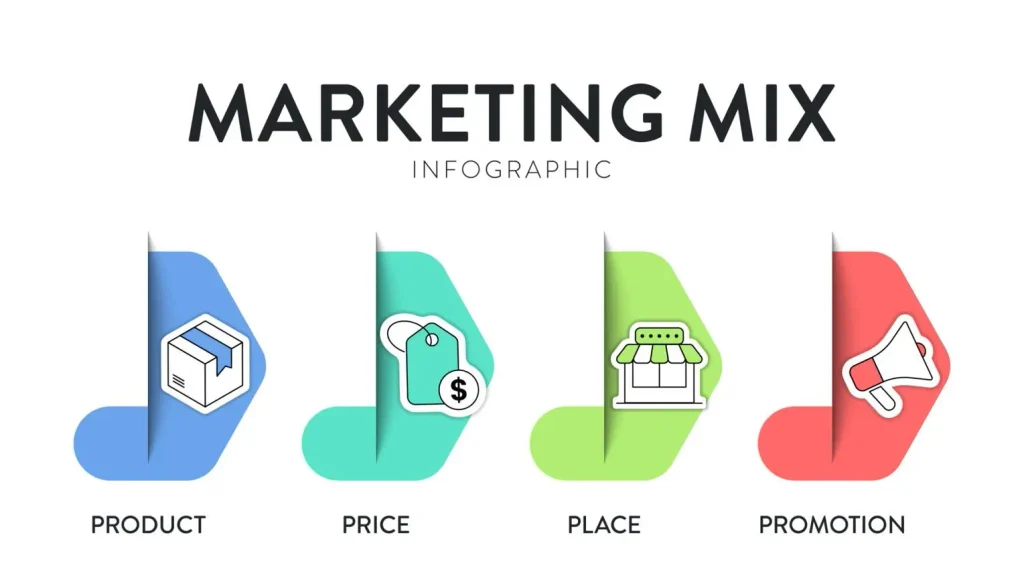
The Marketing Mix: The 4 Ps
The marketing mix is one of the most widely used frameworks for planning marketing activities. It consists of Product, Price, Place, and Promotion.
Product
A product is the good or service offered to satisfy customer needs. Businesses should consider its features, quality, design, packaging, reliability, support, and overall customer experience.
Product decisions should be based on customer demand and competitive conditions. Regular feedback can reveal which features customers value most and which improvements may increase satisfaction.
Price
Price is the amount customers pay for a product or service. Pricing influences perceived value, purchasing decisions, profitability, and market positioning.
Businesses may use cost-based pricing, competitor-based pricing, or value-based pricing. Cost-based pricing considers production and operating costs, competitor-based pricing considers market alternatives, and value-based pricing reflects the value customers perceive in the offering.
A sustainable pricing strategy must account for costs, demand, customer expectations, and business objectives. The lowest price is not necessarily the most attractive option if customers place greater importance on quality, convenience, or reliability.
Place
Place refers to how a product reaches customers. Distribution may involve physical stores, company websites, marketplaces, distributors, wholesalers, or retail partners.
Businesses should choose distribution channels based on customer purchasing habits and operational capabilities. A company selling digital services may distribute them online, while a food retailer may need physical locations or delivery partners.
Convenience is an important consideration. If customers cannot easily find, access, or purchase a product, marketing efforts may fail to produce the desired results.
Promotion
Promotion includes the communication activities used to inform customers about an offering and encourage action. These activities may include advertising, public relations, sales promotions, email marketing, social media, and personal selling.
Effective promotion communicates a clear message to an appropriate audience through relevant channels. It should explain the product’s benefits, establish credibility, and provide a clear next step.
Market Research and Customer Value
Market research helps businesses collect and analyse information about customers, competitors, and market conditions. Primary research may include surveys, interviews, focus groups, and customer observations. Secondary research involves analysing existing reports, industry publications, public statistics, and other available information.
Research reduces uncertainty and supports better marketing decisions. For example, a company considering a new product can use customer interviews and competitor analysis to evaluate demand before investing heavily in production.
Customer value is the perceived benefit customers receive relative to the costs they incur. These costs may include money, time, effort, risk, and inconvenience. Businesses can improve perceived value by increasing benefits, reducing unnecessary costs, or making the purchasing process easier.
Setting SMART Marketing Goals
Marketing objectives should be specific, measurable, achievable, relevant, and time bound. These characteristics are commonly known as SMART goals.
For example, instead of setting a vague objective such as increasing website traffic, a business might aim to increase organic website visits by 20% within six months while maintaining relevant traffic quality.
The goal provides a measurable target and a deadline, making it easier to evaluate progress. Businesses should also establish appropriate metrics, such as conversion rate, customer acquisition cost, lead quality, and revenue generated.
Marketing fundamentals provide the foundation for every subsequent activity. When companies understand their customers, value proposition, marketing mix, and objectives, they can develop more focused and effective strategies.
3. Branding
What Is Branding?
Branding is the process of creating and managing a distinctive identity, reputation, and perception for a business, product, or service. A brand includes more than a name or logo. It encompasses the expectations, associations, experiences, and emotions customers connect with an organization.
A strong brand helps customers recognize a business, understand its value, and distinguish it from competitors. It can also communicate quality, reliability, personality, and purpose.
For example, a customer may choose a particular technology company because of its reputation for innovation, while another may prefer a retailer known for affordability and dependable service. These perceptions form part of each brand’s identity.

Key Elements of a Strong Brand
Brand name and logo: These elements help customers identify the business visually and verbally. They should be recognizable, appropriate for the target market, and consistent across communication channels.
Brand identity: Brand identity includes visual elements such as colours, typography, imagery, packaging, and design standards. A consistent identity makes the business easier to recognize.
Brand values: Brand values describe the principles that guide the company’s decisions and behaviour. These may include reliability, innovation, affordability, sustainability, or customer service.
Brand voice: Brand voice defines how a company communicates. Depending on its audience and positioning, a business may use a formal, friendly, educational, technical, or conversational tone.
Brand promise: A brand promise communicates the experience, or value customers should expect. Businesses must ensure that actual performance supports this promise.
Brand reputation: Reputation develops through product quality, customer reviews, employee behaviour, customer support, and public communication. It cannot be established through visual design alone.
Why Branding Matters in Business
Branding creates recognition and helps businesses establish credibility. Customers who recognize a brand may find it easier to evaluate its offerings, particularly when the company has demonstrated consistent quality and service.
A clear brand identity can also improve marketing efficiency. When customers understand what a business represents, its communication becomes more coherent and memorable.
Branding may support customer loyalty by creating emotional connections and reinforcing a consistent experience. However, loyalty depends on continued value and trust, not simply on a recognizable logo.
Strong branding can also help businesses differentiate their prices and offerings. A company that has earned a reputation for expertise or reliability may compete on factors beyond price alone.
How to Build a Strong Brand
The first step is to define the target audience and understand what matters to them. The second is to identify the business’s unique strengths and determine how it differs from competitors.
Next, develop a clear brand positioning statement and establish visual and verbal guidelines. These guidelines should be applied consistently across the website, social media profiles, advertisements, packaging, sales materials, and customer communications.
Businesses should also ensure that their operations reflect their brand promise. If a company promotes fast service, its actual delivery and customer support processes should support that claim.
Finally, monitor brand performance through customer feedback, review sentiment, awareness surveys, repeat purchase behaviour, and other relevant indicators.
Example: A small skincare business decides to focus on simple routines and clear product information. It uses consistent packaging, explains ingredients transparently, publishes educational content, and responds carefully to customer questions. Over time, these activities can help customers understand what the brand stands for and what they can expect from it.
Branding is therefore an ongoing management responsibility. It requires consistency between what a business communicates and what customers actually experience.
4. Customer Behaviour
What Is Customer Behaviour?
Customer behaviour refers to the ways individuals and organizations recognize needs, search for information, evaluate alternatives, make purchasing decisions, use products, and respond after a purchase.
Understanding customer behaviour helps businesses determine why customers choose certain products, what influences their decisions, and what may prevent them from buying.
Customer behaviour is influenced by psychological, social, cultural, personal, economic, and situational factors. These influences vary between customers and may change over time.

Factors That Influence Customer Behaviour
Psychological factors: Motivation, perception, learning, beliefs, and attitudes affect how customers evaluate products. A customer who values convenience may prefer a delivery service, while another who prioritizes quality may spend more time comparing specifications.
Social factors: Family members, friends, colleagues, online communities, and customer reviews can influence purchasing decisions. Recommendations may reduce uncertainty, particularly for unfamiliar products.
Cultural factors: Cultural values, social norms, traditions, and local preferences influence product choices and communication expectations. Businesses operating across regions should consider these differences when developing marketing campaigns.
Personal factors: Age, occupation, lifestyle, interests, and personal circumstances affect customer needs. A student, a parent, and a business owner may evaluate the same product differently.
Economic factors: Income, available budget, inflation, financing options, and perceptions of value can affect purchasing decisions. When budgets are limited, customers may prioritize essential products or seek lower-cost alternatives.
Situational factors: Time pressure, product availability, shopping environment, device usability, and convenience may determine whether a customer completes a purchase.
The Customer Buying Decision Process
Customers often move through several stages before and after purchasing a product.
1. Need recognition: The customer identifies a problem or need. For example, a person realizes that their current laptop is too slow for work.
2. Information search: The customer looks for potential solutions through search engines, social media, recommendations, advertisements, or product websites.
3. Evaluation of alternatives: The customer compares products based on price, quality, specifications, reputation, warranty, and other relevant criteria.
4. Purchase decision: The customer chooses an option and completes the transaction. Availability, payment methods, delivery options, and trust can influence the final decision.
5. Post-purchase evaluation: The customer compares the actual experience with expectations. Satisfaction may encourage repeat purchases and recommendations, while disappointment may result in complaints or switching to a competitor.
Not every purchase follows these stages in a deliberate sequence. Routine or low-cost purchases may involve little research, while expensive or high-risk purchases often require more evaluation.
How Businesses Can Use Customer Behaviour Insights
Businesses should collect information through surveys, interviews, website analytics, customer service interactions, reviews, and purchasing records. The objective is to identify patterns that can improve products, communication, and customer experience.
For example, if many customers leave an online store during checkout, the business should investigate possible causes. These may include unexpected fees, a complicated form, limited payment options, or delivery uncertainty.
If customers repeatedly ask the same questions about a product, the business may need clearer product descriptions, comparison guides, or frequently asked questions.
Behavioural insights should be used responsibly. Companies should respect privacy, obtain appropriate consent, protect customer data, and avoid manipulative practices.
By understanding what influences purchasing decisions, businesses can create more relevant experiences and remove obstacles that prevent customers from finding suitable solutions.
5. Target Audience
What Is a Target Audience?
A target audience is the specific group of people or organizations a business intends to reach with its marketing messages, products, or services. Rather than attempting to appeal to everyone, businesses identify the customers most likely to benefit from their offerings.
Defining a target audience improves marketing efficiency because it helps companies select appropriate channels, create relevant messages, allocate budgets, and design products around genuine needs.
A business may have several customer segments, but each segment should have identifiable characteristics and a clear reason to be interested in the offering.

Types of Market Segmentation
Market segmentation is the process of dividing a broad market into smaller groups with similar characteristics, needs, or behaviours.
Demographic segmentation: Customers are grouped according to characteristics such as age, occupation, income, education, household size, or business size. These characteristics can help explain differences in needs and purchasing capacity.
Geographic segmentation: Customers are grouped by country, region, city, climate, or other location-based factors. A local restaurant, for example, may primarily target customers within a practical delivery radius.
Psychographic segmentation: This approach considers customers’ interests, lifestyles, values, motivations, and attitudes. Two people with similar incomes may prefer very different products because they have different priorities.
Behavioural segmentation: Customers are grouped according to purchase frequency, product usage, loyalty, benefits sought, or stage in the buying process. For example, first-time buyers may need introductory information, while existing customers may respond to relevant product updates.
Firmographic segmentation: In B2B markets, businesses may be segmented by industry, company size, annual revenue, location, or operational needs.
How to Identify the Right Target Audience
The process begins with understanding the product and the problem it solves. Businesses should determine who experiences that problem, how frequently it occurs, and whether potential customers are willing and able to pay for a solution.
Next, research the market. Customer interviews, surveys, competitor analysis, search trends, and existing sales records can reveal relevant audience characteristics.
The business should then compare potential segments based on market size, customer needs, accessibility, competitive intensity, profitability, and strategic fit. A large segment is not necessarily the best choice if it is difficult to reach or has little interest in the product.
Finally, create a customer profile or buyer persona that represents a useful segment. A persona may include the customer’s goals, challenges, budget, preferred channels, buying motivations, and common objections.
Understanding Customer Pain Points
Pain points are the problems, frustrations, or unmet needs customers want to resolve. Identifying them helps businesses develop messages that explain the practical value of their offerings.
For example, a small business owner may struggle with managing invoices manually. An accounting software company can address this pain point by explaining how its product helps organize records, reduce repetitive tasks, and improve visibility into finances.
The marketing message is more effective when it connects product features to meaningful customer outcomes.
Why Target Audience Selection Matters
A clearly defined target audience helps businesses avoid irrelevant advertising and improve conversion opportunities. It also supports product development, pricing, customer service, and brand positioning.
However, target audiences should not remain fixed indefinitely. Customer needs and market conditions evolve, so businesses should review their assumptions using current data and feedback.
Effective targeting combines research with continuous testing. Companies should refine their audience profiles as they learn which customer segments respond most positively to their offerings.
6. Customer Acquisition
What Is Customer Acquisition?
Customer acquisition is the process of attracting potential customers, engaging them with a business, and converting them into paying customers. It includes the activities used to generate awareness, capture interest, nurture prospects, and facilitate purchases.
A customer acquisition strategy aims to generate customers at a cost that is sustainable relative to the value those customers are expected to create.
Acquisition is essential for businesses seeking to launch products, expand into new markets, replace lost customers, or increase revenue. However, acquiring large numbers of customers is not necessarily beneficial if those customers are unprofitable or unlikely to remain engaged.
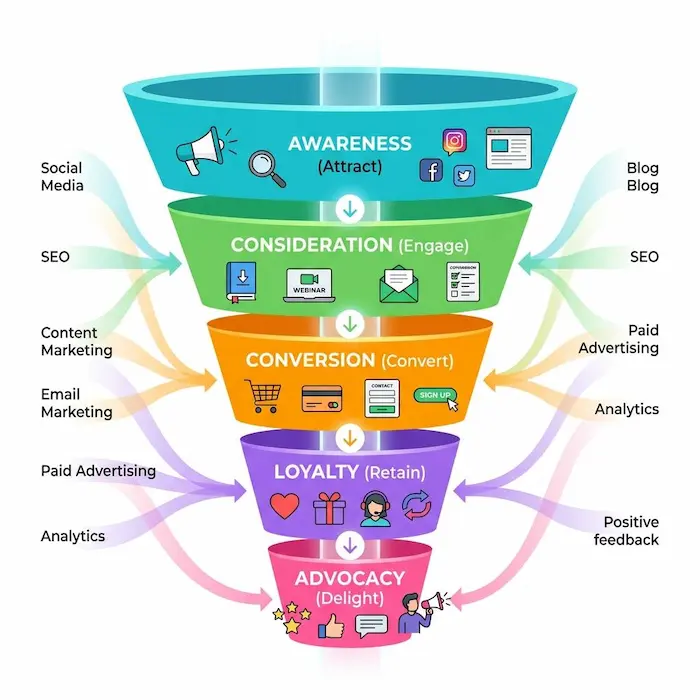
Major Customer Acquisition Channels
Search Engine Optimization (SEO): SEO improves a website’s visibility in relevant unpaid search results. Businesses can attract people who are actively searching for products, services, solutions, or information related to their offerings.
Effective SEO involves useful content, relevant keyword research, clear site structure, descriptive page titles, technical accessibility, and a positive user experience.
Content marketing: Articles, guides, case studies, videos, and educational resources can attract prospects by answering their questions. Helpful content can establish expertise and support customers throughout their decision-making process.
Social media marketing: Social platforms allow businesses to communicate with audiences, share content, demonstrate products, and participate in relevant conversations. The most suitable platform depends on where the target audience spends time and how it prefers to engage.
Paid advertising: Search ads, social media ads, display advertising, and other paid placements can help businesses reach selected audiences. Campaigns should have clear objectives, suitable targeting, relevant landing pages, and measurable outcomes.
Email marketing: Email can nurture prospects who have voluntarily subscribed to communications. Businesses may use educational sequences, product updates, demonstrations, and relevant offers to help prospects make informed decisions.
Referral marketing: Existing customers, partners, and professional networks can introduce a business to new prospects. Referral programs may encourage participation, but recommendations should remain genuine and transparent.
Partnerships and networking: Businesses can acquire customers through complementary service providers, industry events, professional associations, and strategic partnerships.
The Customer Acquisition Funnel
The acquisition funnel describes the stages through which prospects move toward becoming customers.
Awareness: Potential customers discover the business through search, advertising, referrals, social media, or other channels.
Interest: Prospects engage with the brand by visiting the website, reading content, viewing product information, or following a social account.
Consideration: Prospects compare options, evaluate benefits, review testimonials, request demonstrations, or ask questions.
Conversion: The prospect completes a purchase, signs a contract, or takes another defined action that makes them a customer.
Onboarding: The business helps the new customer understand the product, complete setup, and achieve initial value.
Each stage presents opportunities for improvement. A business with high website traffic but few purchases may need better product information, stronger trust signals, more relevant offers, or a simpler checkout process.
Understanding Customer Acquisition Cost
Customer Acquisition Cost (CAC) measures the average cost of acquiring a new customer over a defined period.
A basic formula is:
Customer Acquisition Cost = Total Acquisition Costs ÷ Number of New Customers Acquired
Suppose a business spends $2,000 on marketing and sales activities in one month and acquires 100 new customers. Its CAC is $20 per customer.
The calculation should use a consistent cost definition. Depending on the business, acquisition costs may include advertising, marketing tools, agency fees, sales salaries, commissions, and other relevant expenses.
CAC should not be evaluated in isolation. A customer acquired for $20 may be highly valuable if they generate substantial contribution profit over time, while the same acquisition cost may be unsustainable for a low-margin product.
Businesses should also examine acquisition by channel, campaign, and customer segment to identify where spending produces the strongest results.
How to Improve Customer Acquisition
First, define the type of customer the business wants to acquire. Then select channels that match that audience’s habits and purchasing intent.
Create a clear value proposition that explains why the offering is relevant and how it differs from alternatives. Ensure that landing pages and product descriptions answer important questions, communicate costs clearly, and provide an obvious next step.
Test different messages, offers, creative formats, and landing page layouts. Use conversion rates and customer quality, not just clicks or impressions, to evaluate performance.
Finally, improve the transition from marketing to sales and onboarding. Slow responses, confusing pricing, poor communication, and difficult setup processes can undermine otherwise successful acquisition campaigns.
Example: A software company attracts prospects through educational blog posts, offers a free product demonstration, and follows up with interested leads. Its sales team then discusses customer needs before recommending an appropriate plan. This process connects marketing activity with a relevant purchasing decision.
Successful customer acquisition depends on reaching the right people, communicating genuine value, and making the purchasing process straightforward.
7. Customer Retention
What Is Customer Retention?
Customer retention refers to a business’s ability to maintain relationships with existing customers and encourage them to continue purchasing or using its products and services.
Retention is important because customers who remain satisfied may make repeat purchases, recommend the business to others, and become more familiar with its offerings. Strong retention can also reduce dependence on constantly acquiring new customers.

However, retention should not be treated as a goal in isolation. Businesses should aim to retain customers by delivering continuing value rather than making cancellation difficult or using misleading incentives.
Why Customer Retention Matters
Repeat revenue: Customers who continue purchasing can provide a more predictable source of revenue, particularly in subscription-based or recurring-purchase businesses.
Relationship development: Over time, businesses can better understand customers’ preferences and provide more relevant recommendations and support.
Referral opportunities: Satisfied customers may recommend a company to friends, colleagues, or other organizations.
Customer feedback: Long-term customers can provide useful insights into product improvements, service problems, and unmet needs.
Improved customer economics: Depending on the business model, retaining customers can spread acquisition costs across a longer relationship and improve overall profitability.
Effective Customer Retention Strategies
Deliver consistent quality: Customers expect products and services to perform as promised. Quality problems should be addressed quickly and systematically.
Provide responsive customer support: Customers should have accessible channels to ask questions, report problems, and receive assistance. Clear communication and realistic response times help establish trust.
Make onboarding effective: New customers need to understand how to use the product and achieve value. Helpful instructions, tutorials, setup assistance, and welcome communications can reduce early frustration.
Personalize the experience: Businesses can use relevant customer preferences and purchase history to provide suitable recommendations and communication. Personalization should respect privacy and avoid excessive messaging.
Reward loyalty appropriately: Loyalty points, membership benefits, exclusive services, and relevant repeat-purchase offers can encourage continued engagement. Rewards should be financially sustainable and easy to understand.
Collect and act on feedback: Surveys, reviews, support tickets, and customer interviews can reveal dissatisfaction. Businesses should communicate what they have improved when feedback leads to meaningful changes.
Maintain useful communication: Product updates, reminders, educational content, and service notifications can keep customers informed. Communication should be relevant, appropriately timed, and consistent with customer preferences.
Recover service failures: When something goes wrong, businesses should acknowledge the problem, explain the next steps, and work toward a fair resolution. A well-managed complaint can help restore confidence, although it cannot guarantee that every customer will remain.
Measuring Customer Retention
Customer Retention Rate measures the proportion of customers retained over a period, excluding newly acquired customers from the starting base.
A common formula is:
Retention Rate = ((Customers at End − New Customers Acquired) ÷ Customers at Start) × 100
Suppose a business starts a quarter with 500 customers, acquires 100 new customers, and ends the quarter with 520 customers.
Retention rate = ((520 − 100) ÷ 500) × 100 = 84%.
The calculation assumes consistent customer definitions and a comparable reporting period. Different business models may require adjustments for customer accounts, subscriptions, contracts, or active users.
Other useful metrics include repeat purchase rate, churn rate, customer lifetime value, renewal rate, and customer satisfaction.
Customer Churn and Its Causes
Customer churn occurs when customers stop purchasing, discontinue a subscription, or otherwise end their relationship with a business.
Common causes include poor product quality, inadequate support, high prices relative to perceived value, inconvenient processes, changing customer needs, and stronger competitive alternatives.
Businesses should analyse churn patterns rather than relying on assumptions. For example, if many subscribers cancel shortly after signing up, the problem may involve onboarding, product expectations, or an unclear value proposition.
Retention strategies are most effective when they address the underlying reasons customers leave.
8. Customer Relationship Management (CRM)
What Is Customer Relationship Management?
Customer Relationship Management, commonly known as CRM, is the combination of processes, practices, and technologies used to manage interactions with current and potential customers.
CRM helps businesses organize customer information, track sales opportunities, coordinate communication, monitor service requests, and maintain a consistent view of customer relationships.
A CRM system may store contact details, communication history, purchase records, lead status, preferences, support cases, and planned follow-up activities, subject to appropriate privacy and access controls.

CRM is not simply a software purchase. Its value depends on whether the organization uses reliable data, clearly defined processes, and consistent practices to improve customer interactions.
Key Functions of CRM
Contact management: CRM systems organize customer and prospect information so employees can access relevant details when communicating with them.
Lead management: Businesses can record new leads, assign responsibilities, track qualification status, and monitor progress toward conversion.
Sales pipeline management: CRM tools help teams understand where opportunities stand, what actions are required, and which deals may need attention.
Marketing automation: Depending on the platform, CRM systems can support scheduled communications, audience segmentation, follow-up reminders, and campaign workflows.
Customer service management: Support teams can record customer questions, track unresolved issues, review interaction history, and coordinate responses.
Reporting and analytics: CRM reporting can reveal lead conversion rates, sales cycle duration, customer activity, pipeline value, and other performance indicators.
Types of CRM Systems
Operational CRM: Focuses on streamlining sales, marketing, and customer service activities. It often includes contact management, task automation, and workflow tools.
Analytical CRM: Focuses on analysing customer data to identify patterns, measure performance, and support decisions about segmentation, retention, and customer value.
Collaborative CRM: Supports information sharing and coordination between teams or departments that interact with customers.
Many modern CRM platforms combine these capabilities in one system.
Benefits of CRM for Businesses
CRM can reduce information gaps between marketing, sales, and customer support. When employees can review relevant interaction history, customers are less likely to need to repeat the same information unnecessarily.
It can also improve follow-up discipline. For example, a sales representative can receive a reminder to contact a prospect after a demonstration, while a service team can track an unresolved complaint until it is addressed.
CRM data can help businesses identify promising customer segments, understand conversion bottlenecks, and evaluate relationship quality.
For smaller organizations, even a basic CRM system may be useful if it replaces fragmented spreadsheets and inconsistent manual tracking. The appropriate solution depends on business complexity, budget, data requirements, and integration needs.
How to Implement CRM Successfully
Step 1: Define business objectives. Determine whether the primary goal is improving lead management, increasing sales visibility, strengthening customer service, or coordinating marketing campaigns.
Step 2: Map existing processes. Understand how leads arrive, how opportunities are qualified, how orders are processed, and how customer issues are resolved.
Step 3: Choose suitable software. Compare features, ease of use, reporting capabilities, security controls, integration options, scalability, and total cost of ownership.
Step 4: Organize customer data. Remove unnecessary duplicates, standardize key fields, and define rules for maintaining accurate records.
Step 5: Train employees. Explain how the system supports daily work and establish clear expectations for data entry and follow-up.
Step 6: Measure adoption and results. Track whether employees use the system consistently and whether it improves outcomes such as response times, conversion rates, or service resolution.
CRM, Privacy, and Customer Trust
Customer data should be collected and used for legitimate, clearly communicated purposes. Businesses should limit access according to job responsibilities, protect sensitive information, establish retention practices, and follow applicable privacy and data-protection requirements.
They should also avoid collecting unnecessary information or using personal data in ways that violate customer expectations.
Example: A consulting firm uses CRM software to track inquiries, record client requirements, schedule follow-ups, and monitor project communication. The system helps employees coordinate their work and provide more consistent service without relying entirely on individual memory.
CRM creates value when it improves the quality and continuity of customer relationships, rather than merely accumulating data.
9. Sales Management
What Is Sales Management?
Sales management is the process of planning, organizing, directing, and evaluating sales activities to achieve business objectives. It includes setting sales targets, managing sales representatives, forecasting revenue, allocating territories, monitoring opportunities, and improving sales performance.
Marketing and sales have related but distinct responsibilities. Marketing creates awareness, develops demand, and attracts relevant prospects. Sales works directly with prospects and customers to understand requirements, recommend solutions, negotiate terms, and complete transactions.

Strong coordination between these functions helps businesses create a more consistent customer journey.
Main Responsibilities of Sales Management
Sales planning: Managers establish sales objectives, define target markets, assign responsibilities, and determine the activities required to achieve revenue goals.
Sales forecasting: Forecasting estimates future sales based on historical performance, current opportunities, market conditions, seasonality, and other relevant information.
Team recruitment and training: Sales representatives need product knowledge, communication skills, ethical selling practices, negotiation abilities, and an understanding of customer needs.
Performance monitoring: Managers review sales results and leading indicators, such as qualified meetings, proposal activity, conversion rates, and pipeline health.
Customer relationship development: Sales teams maintain communication with prospects, support existing accounts, and identify opportunities to solve additional customer problems.
Sales process improvement: Managers examine delays, lost deals, objections, and operational barriers to improve consistency and effectiveness.
The Sales Process
A structured sales process helps representatives understand what to do at each stage of a potential transaction.
1. Prospecting: Identify individuals or organizations that may benefit from the product or service.
2. Qualification: Assess whether the prospect has a relevant need, sufficient budget, appropriate timing, and the ability to make or influence a purchasing decision.
3. Needs discovery: Ask questions to understand the customer’s objectives, constraints, challenges, and expectations.
4. Solution presentation: Explain how the offering addresses the customer’s requirements. Demonstrations, proposals, comparisons, and case studies may be useful.
5. Handling objections: Address concerns about price, implementation, risk, timing, or suitability with accurate information and clear explanations.
6. Negotiation and closing: Agree on appropriate terms and complete the purchase process without misrepresenting benefits or pressuring the customer unfairly.
7. Follow-up and account development: Confirm that the customer receives the expected value, resolve outstanding issues, and identify relevant future needs.
The process should remain flexible enough to accommodate differences between customers and purchasing situations.
Sales Targets and Key Performance Indicators
Sales targets translate business objectives into measurable expectations. These targets may focus on revenue, units sold, new accounts, renewal rates, qualified opportunities, or profitability.
Useful sales metrics include:
- Total sales revenue: The amount generated from sales during a defined period.
- Conversion rate: The percentage of relevant prospects or opportunities that complete the desired action.
- Average deal size: The average value of completed transactions.
- Sales cycle length: The average time required to move an opportunity from a defined starting point to a completed sale.
- Win rate: The percentage of qualified opportunities that result in a win, using a consistent definition of eligible opportunities.
- Sales quota attainment: The percentage of an assigned sales target achieved.
- Customer retention or renewal rate: The proportion of customers or contracts maintained over a specified period.
Metrics should be interpreted in context. A high revenue figure may not indicate strong performance if discounts are excessive or margins are poor. Similarly, a large pipeline may have limited value if opportunities are unlikely to close.
Sales Forecasting and Planning
Sales forecasting helps businesses estimate future demand and plan staffing, inventory, production, and cash flow.
Forecasts may use historical trends, opportunity-stage probabilities, customer commitments, seasonal patterns, and market intelligence. Managers should distinguish committed sales from uncertain opportunities and document the assumptions behind estimates.
Forecast accuracy improves when sales teams maintain up-to-date CRM records and use consistent opportunity definitions.
Improving Sales Team Performance
Sales performance can improve through regular coaching, practical training, better qualification, clear product information, and structured feedback.
Managers should review lost opportunities to identify recurring problems. These may include weak discovery questions, slow response times, unsuitable pricing, limited product fit, or unclear proposals.
Compensation plans should encourage profitable, ethical, and sustainable outcomes. Incentives based exclusively on transaction volume may encourage unsuitable selling or excessive discounting.
Example: A B2B software company notices that many prospects request demonstrations but do not proceed to purchase. Its sales manager reviews call notes and discover that representatives often demonstrate features before understanding the prospect’s business needs. The team introduces a discovery checklist and tailors’ demonstrations to specific requirements. This change can improve the relevance of conversations and help the company identify qualified opportunities more accurately.
Effective sales management combines measurable objectives with customer-cantered practices and continuous improvement.
10. Market Positioning
What Is Market Positioning?
Market positioning is the process of establishing a distinctive and meaningful place for a product, service, or brand in the minds of target customers relative to competing alternatives.
Positioning influences how customers understand an offering, which benefits they associate with it, and why they might choose it over another option.
A business may position itself around affordability, premium quality, convenience, innovation, specialization, reliability, or customer service. The appropriate position depends on the target audience, competitive environment, business capabilities, and evidence supporting its claims.
Market positioning is not simply the message a company wants to communicate. It is the perception the business seeks to establish through its marketing, product performance, pricing, distribution, and customer experience.
Why Market Positioning Matters
Clear positioning helps customers understand what makes a business relevant. When several competitors offer similar products, a distinctive value proposition can help customers compare alternatives more easily.
Positioning also supports marketing consistency. Product descriptions, advertising, pricing, visual identity, and customer service can reinforce the same strategic message.
For example, a company positioned around convenience should make purchasing, delivery, setup, and support straightforward. If the actual experience is complicated, the positioning becomes less credible.
Strong positioning can help businesses avoid competing exclusively on price. However, differentiation must be meaningful to customers and supported by real capabilities.
Key Elements of Market Positioning
Target market: The specific group of customers the business intends to serve.
Customer need: The problem, desire, or desired outcome that makes the offering relevant.
Value proposition: The primary reason customers should consider the product or service.
Competitive differentiation: The meaningful characteristics that distinguish the offering from alternatives.
Reasons to believe: Evidence supporting the brand’s claims, such as product performance, service standards, relevant expertise, warranties, or verified customer experiences.
Types of Market Positioning
Price-based positioning: A business emphasizes affordability or value for money. It must manage costs and quality carefully to ensure that the approach remains sustainable.
Quality-based positioning: A business emphasizes craftsmanship, reliability, performance, or durability. Its product and service delivery must support these claims.
Convenience-based positioning: A company emphasizes accessibility, speed, ease of use, delivery, or simplified purchasing.
Specialist positioning: A business focuses on a particular industry, audience, or use case. Specialization can help it develop expertise, and address needs that broader competitors may overlook.
Innovation-based positioning: A company emphasizes new capabilities, distinctive technology, or improved ways of solving customer problems.
Service-based positioning: A business differentiates itself through responsive support, personalized assistance, or a more dependable customer experience.
These approaches can overlap. A company might combine specialization with exceptional service, provided the combined position remains clear and credible.
How to Develop a Market Positioning Strategy
Step 1: Research the market. Study customer needs, competitor offerings, price ranges, service quality, and gaps in the available solutions.
Step 2: Define the target customer. Identify the audience that is most likely to value the business’s strengths.
Step 3: Identify meaningful differentiation. Determine which capabilities, benefits, or experiences make the business distinct. Avoid claims that competitors can easily make or that customers do not value.
Step 4: Create a value proposition. Explain who the business serves, what problem it solves, and why its approach is relevant.
Step 5: Align business decisions. Ensure that product design, pricing, distribution, communication, and service delivery reinforce the selected position.
Step 6: Test customer perceptions. Use interviews, surveys, customer feedback, and market performance to assess whether customers understand the intended differentiation.
Step 7: Review and refine. Adjust the strategy when customer expectations, competitors, or business capabilities change.
Using a Positioning Statement
A positioning statement is an internal strategic description that helps guide marketing and business decisions. A practical template is:
For [target audience], [brand or business] provides [product or service category] that delivers [primary benefit] because [credible point of differentiation].
For example:
“For small businesses that need reliable online sales tools, our platform provides straightforward e-commerce management with practical setup guidance and responsive customer support.”
This statement identifies an audience, a solution, a benefit, and a differentiating approach. A business should adapt the statement to its actual capabilities and customer research.
Competitive Analysis and Perceptual Mapping
Competitive analysis helps businesses compare their offerings with relevant alternatives. Useful factors may include pricing, features, customer service, distribution, brand reputation, and specialized expertise.
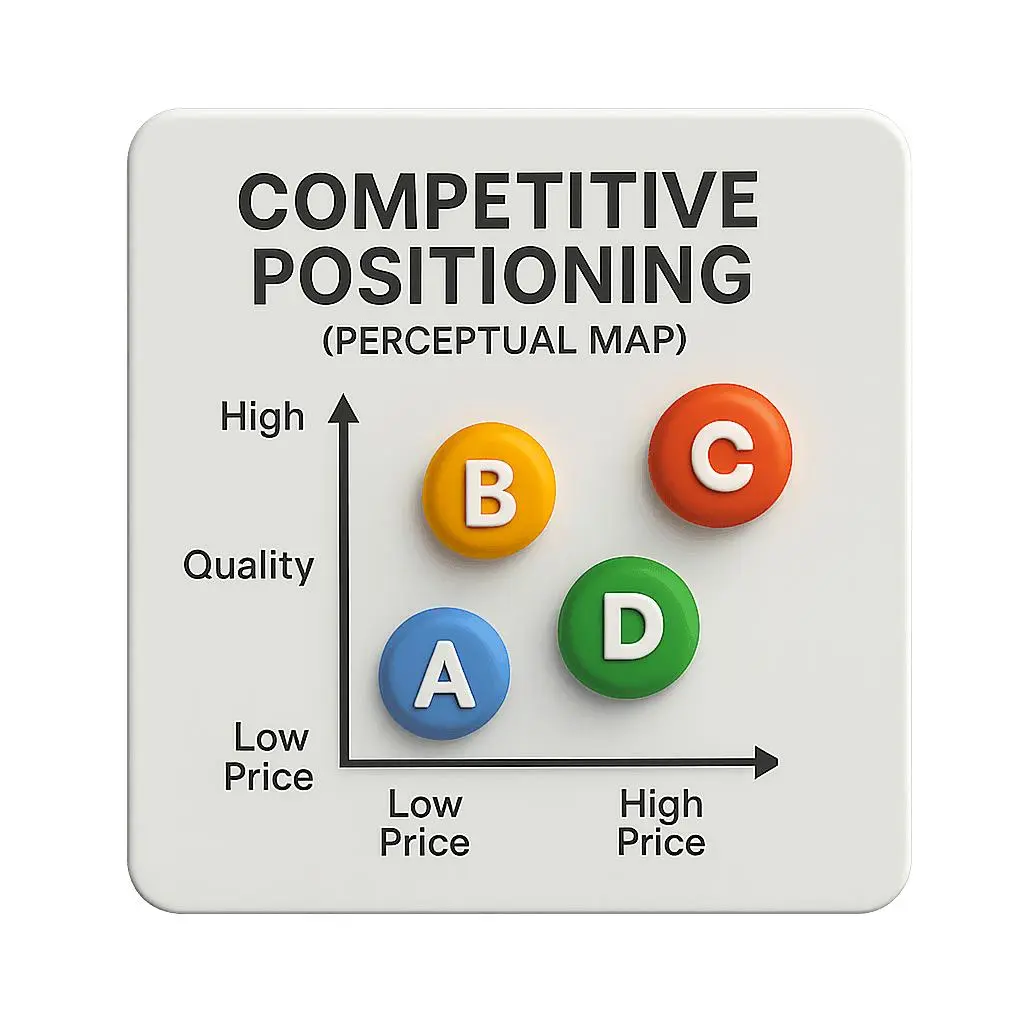
A perceptual map is a visual tool that compares how customers perceive competing brands along two dimensions, such as affordability and perceived quality. It can help businesses explore existing market positions and potential opportunities.
However, perceptual maps should be based on customer research where possible. A position that appears attractive on paper may not represent a genuine customer need or a commercially viable opportunity.
Market positioning is most effective when it reflects a real customer benefit, differentiates the business clearly, and remains consistent with the experience customers receive.
11. How the Ten Marketing Concepts Work Together
Although each area of business marketing has a distinct purpose, these concepts are closely connected. Businesses achieve better results when they coordinate them as part of a unified strategy.
Consider an online clothing store entering a competitive market.
First, business marketing establishes the overall strategy. The company research demand, identifies business objectives, and determines how it will reach customers.
Second, marketing fundamentals guide decisions. The company selects suitable products, develops a pricing approach, chooses distribution channels, and plans promotional activities.
Third, branding creates recognition. The store develops a consistent visual identity, communicates its values, and establishes a recognizable customer experience.
Fourth, customer behaviour research informs decisions. The company examines how shoppers compare products, what influences purchasing decisions, and why some visitors abandon their carts.
Fifth, target audience selection improves relevance. The store identifies customer segments based on factors such as clothing preferences, budget, location, and purchasing habits.
Sixth, customer acquisition attracts new buyers. SEO content, social media campaigns, targeted advertising, and referral activity introduce the store to potential customers.
Seventh, customer retention encourages repeat purchases. Reliable delivery, product quality, responsive support, and relevant offers give customers reasons to return.
Eighth, CRM coordinates customer information. The business maintains appropriate records, manages inquiries, tracks orders, and organizes customer communications.
Ninth, sales management improves commercial performance. The business monitors sales revenue, conversion rates, product performance, and customer objections.
Tenth, market positioning differentiates the store. The company communicates a clear reason to choose its products, such as distinctive designs, dependable sizing information, or convenient service.
Together, these activities create a connected customer journey, from initial awareness through purchase and ongoing engagement.
Creating a Customer-Cantered Marketing Framework
Businesses can strengthen this integration through a practical framework.
Understand: Research customer needs, behaviour, expectations, and market conditions.
Define: Select target segments, establish business objectives, and articulate the value proposition.
Attract: Use appropriate channels to generate awareness and qualified interest.
Convert: Provide clear information, relevant offers, and a convenient purchasing process.
Deliver: Fulfil the brand promise through quality products, reliable service, and effective onboarding.
Retain: Maintain useful communication, resolve problems, and provide continuing value.
Measure: Evaluate performance and use customer feedback to improve the strategy.
This framework emphasizes that marketing does not end when a customer makes a purchase. The quality of the post-purchase experience affects satisfaction, loyalty, reputation, and future business opportunities.
12. Common Business Marketing Mistakes to Avoid
Even businesses with strong products can struggle when their marketing processes are poorly planned. Recognizing common mistakes helps organizations improve efficiency and reduce avoidable problems.
Targeting Everyone
Trying to appeal to every possible customer often results in generic messages and inefficient spending. Businesses should identify the customer segments most likely to value their offerings and tailor communication accordingly.
Focusing on Features Instead of Benefits
Product features describe what an offering includes, while benefits explain why those features matter. Customers are more likely to understand the value of a product when businesses connect features to practical outcomes.
Ignoring Customer Feedback
Repeated complaints may reveal problems with quality, delivery, pricing, or support. Businesses should establish methods for collecting feedback, analysing recurring issues, and implementing improvements.
Relying on One Marketing Channel
Depending entirely on one advertising platform or acquisition source creates risk. Businesses should evaluate whether a diversified mix of relevant channels can improve resilience without spreading resources too thinly.
Measuring Vanity Metrics
Impressions, followers, and page views can indicate reach, but they do not automatically demonstrate commercial success. Businesses should connect activity metrics to qualified leads, conversions, revenue, profitability, and retention where appropriate.
Neglecting Existing Customers
A business that focuses exclusively on acquiring new customers may overlook opportunities to improve satisfaction and repeat purchasing. Customer retention should be integrated into marketing and service planning.
Inconsistent Branding
Different messages, visual styles, and service experiences can confuse customers. Clear brand guidelines and consistent delivery help reinforce recognition and trust.
Overcomplicating the Customer Journey
Unclear product descriptions, hidden fees, unnecessary checkout steps, and slow responses can prevent customers from completing purchases. Businesses should identify and remove avoidable friction.
Misusing Customer Data
Collecting excessive information, sending unwanted messages, or failing to protect customer records can undermine trust. Data practices should be transparent, proportionate, secure, and compliant with applicable requirements.
Failing to Review Results
Marketing conditions change over time. Businesses should review campaign performance, customer behaviour, competitive activity, and financial outcomes regularly rather than relying on outdated assumptions.
Avoiding these mistakes requires clear objectives, accurate information, coordinated teams, and a willingness to improve based on evidence.
13. Measuring Business Marketing Performance
Marketing performance measurement helps businesses understand whether their activities are producing meaningful results. The most useful indicators depend on business objectives, sales cycles, margins, and customer relationships.
Brand Awareness Metrics
Businesses may measure branded search activity, relevant reach, direct website visits, brand recall, and customer awareness surveys. These indicators help assess whether the target audience is becoming more familiar with the brand.
Acquisition Metrics
Useful indicators include qualified leads, website conversion rate, cost per lead, customer acquisition cost, and the number of new customers acquired. Businesses should also examine the quality and profitability of acquired customers.
Sales Metrics
Sales revenue, average transaction value, conversion rate, win rate, sales cycle duration, and gross margin can help assess commercial performance.
Retention Metrics
Retention rate, churn rate, repeat purchase rate, renewal rate, and customer lifetime value help businesses evaluate the durability and economics of customer relationships.
Customer Experience Metrics
Customer satisfaction surveys, Customer Satisfaction Score (CSAT), Customer Effort Score (CES), and Net Promoter Score (NPS) may provide useful feedback when used appropriately.
Each metric has limitations. For example, a recommendation score does not directly measure profitability, and customer satisfaction may not fully predict future purchasing behaviour. Businesses should interpret customer experience measures alongside behavioural and financial data.
Customer Lifetime Value
Customer Lifetime Value (CLV or LTV) estimates the value a customer generates over the course of the relationship. The appropriate calculation depends on the business model and whether the business measures revenue, gross profit, or contribution profit.
A simplified model for a business with reasonably stable customer behaviour is:
Estimated Customer Lifetime Value = Average Revenue per Customer per Period × Gross Margin × Average Customer Lifetime in Periods
Suppose a subscription business generates $50 in monthly revenue per customer, has a 60% gross margin, and estimates an average customer lifetime of 12 months.
Estimated gross-profit-based lifetime value = $50 × 0.60 × 12 = $360.
This simplified calculation estimates $360 in gross profit over the customer relationship before acquisition costs and other expenses not included in the gross margin calculation.
Actual results may differ because customers can change plans, purchase additional services, become inactive, or incur different service costs. More advanced models can account for retention curves, discount rates, expansion revenue, and variation between customer segments.
Using Metrics to Make Better Decisions
Businesses should establish a small set of key performance indicators that directly relate to their objectives. For example, a company focused on profitable growth may track acquisition cost, contribution margin, retention, and customer lifetime value.
Teams should review results at appropriate intervals and investigate meaningful changes. A sudden decline in conversions may indicate technical problems, increased competition, unsuitable traffic, or changes in customer demand.
The goal of measurement is not simply to produce reports. It is to identify opportunities, test improvements, allocate resources more effectively, and make better business decisions.
14. The Future of Business Marketing and Customer Management
Business marketing continues to evolve as technology, customer expectations, and competitive conditions change. Several developments are particularly relevant to modern organizations.
Artificial Intelligence and Marketing Automation
AI-powered tools can assist with research, content development, customer service, segmentation, forecasting, and data analysis. Automation can also help businesses manage repetitive tasks and respond more efficiently to customer inquiries.
However, AI-generated content and automated recommendations require human oversight. Businesses should verify factual claims, maintain an appropriate brand voice, protect customer information, and ensure that automated interactions do not mislead users.
Personalization and Customer Experience
Customers increasingly expect relevant information and convenient service. Businesses can use appropriate customer insights to tailor recommendations, communications, and support.
Personalization should remain useful and proportionate. Excessive tracking or intrusive messaging can undermine trust and reduce engagement.
Omnichannel Marketing
Customers may discover a brand through search, research products on social media, ask questions through messaging platforms, and complete purchases on a website or in a store.
Omnichannel marketing aims to create a coherent experience across these interactions. Businesses should maintain consistent information, pricing, service standards, and brand messaging across relevant channels.
Privacy and Responsible Data Use
Privacy expectations and regulatory requirements make responsible data management increasingly important. Businesses should understand which data they need, explain how it will be used, secure it appropriately, and respect applicable consent and communication requirements.
Responsible data practices can help protect customers and support long-term trust.
Community and Customer Advocacy
Customer communities, educational resources, genuine reviews, and referral relationships can help businesses develop stronger connections with their audiences.
Organizations should encourage authentic participation rather than manufacturing reviews or making unsupported claims. Trustworthy customer advocacy depends on credible experiences and transparent communication.
Continuous Learning and Adaptation
No marketing strategy remains effective indefinitely. Customer preferences, technology, competitors, and market conditions change, requiring businesses to review assumptions and adapt their approaches.
Companies that combine customer insight, reliable measurement, practical experimentation, and consistent service are better equipped to respond to changing conditions.
Conclusion
Business marketing and customer management are essential components of sustainable business growth. Companies must understand their markets, identify suitable customers, communicate meaningful value, and provide experiences that support trust and long-term engagement.
The ten areas discussed in this guide work together to create an effective marketing system. Business marketing establishes the overall direction, while marketing fundamentals guide product, pricing, distribution, and promotion decisions. Branding builds recognition, and customer behaviour research helps businesses understand purchasing motivations. Target audience selection improves relevance, while customer acquisition generates new business opportunities.
Customer retention and customer relationship management help organizations maintain meaningful relationships after the initial purchase. Sales management coordinates commercial activities and evaluates performance, while market positioning establishes a clear reason for customers to consider one offering over competing alternatives.
Successful marketing requires more than advertising or short-term promotional campaigns. It involves a continuous process of research, planning, execution, measurement, and improvement. Businesses should monitor customer feedback, analyse performance indicators, adapt to changing market conditions, and ensure that their actual products and services support the promises made through marketing.
Ultimately, the most effective business marketing strategies connect customer needs with genuine value. Organizations that combine clear positioning, responsible customer data practices, consistent service, and evidence-based decision-making can strengthen their competitiveness and create more sustainable customer relationships.
Whether a company is a small local business, an online retailer, a professional service provider, or a large organization, understanding business marketing and customers provides a practical foundation for making better decisions and pursuing long-term success.
Frequently Asked Questions (FAQs)
What is business marketing?
Business marketing is the process of understanding customer needs, developing valuable products or services, communicating their benefits, and building relationships that support business objectives. It includes market research, branding, pricing, promotion, sales, and customer relationship management.
Why is marketing important for business growth?
Marketing helps businesses reach relevant audiences, generate demand, communicate value, acquire customers, and strengthen brand recognition. When connected to effective sales and service processes, it can contribute to revenue growth and long-term customer relationships.
What are the four fundamentals of the marketing mix?
The four Ps are Product, Price, Place, and Promotion. They help businesses plan what they offer, how much they charge, how customers access the offering, and how they communicate its value.
What is the difference between branding and marketing?
Branding establishes the identity, reputation, and associations connected with a business. Marketing includes the broader activities used to understand customers, communicate value, generate demand, and achieve commercial objectives. Branding supports marketing by providing a consistent identity and positioning.
How can a business identify its target audience?
A business can use market research, customer interviews, surveys, purchase records, and competitor analysis to identify relevant customer segments. Demographic, geographic, psychographic, behavioural, and firmographic characteristics can help define the most appropriate audience.