

Starting a career in digital marketing from home is possible even if you have no previous experience, professional qualifications, or marketing background. You don’t need to rent an office, hire a team, or invest thousands of dollars to get started. With a computer, a reliable internet connection, and a willingness to learn, you can develop valuable marketing skills from home.
The best part is that you don’t have to master every area of digital marketing before starting. You can begin with one skill, practice it on a personal project, build a portfolio, and gradually find opportunities to work with clients or businesses.
However, knowing where to begin can be confusing. There are many marketing skills, online courses, tools, and career paths to choose from. Some beginners spend months watching tutorials without gaining practical experience, while others jump between different skills and never become confident in one.
The solution is to follow a clear learning path.
In this guide, you’ll learn how to start digital marketing from home with no experience, which skills to learn first, where to find free training, how to practice without clients, and how to build a portfolio. You’ll also discover different ways to earn money, find your first client, and follow a realistic 90-day plan to turn your learning into practical experience.
What Is Digital Marketing?
Digital marketing is the process of promoting products, services, businesses, and brands through online channels. Instead of depending only on traditional advertising methods such as newspapers, television, and billboards, businesses use the internet to reach potential customers.
These channels include search engines, websites, social media platforms, email, and online advertisements.
For example, imagine a small clothing business that wants to sell more products. It could use Instagram to showcase new collections, SEO to attract people searching for clothing on Google, and paid advertisements to reach potential buyers.
All these activities are examples of digital marketing.
If you’re completely new to the subject, you can first understand the fundamentals in this guide to what digital marketing is and how it works.
Main Types of Digital Marketing
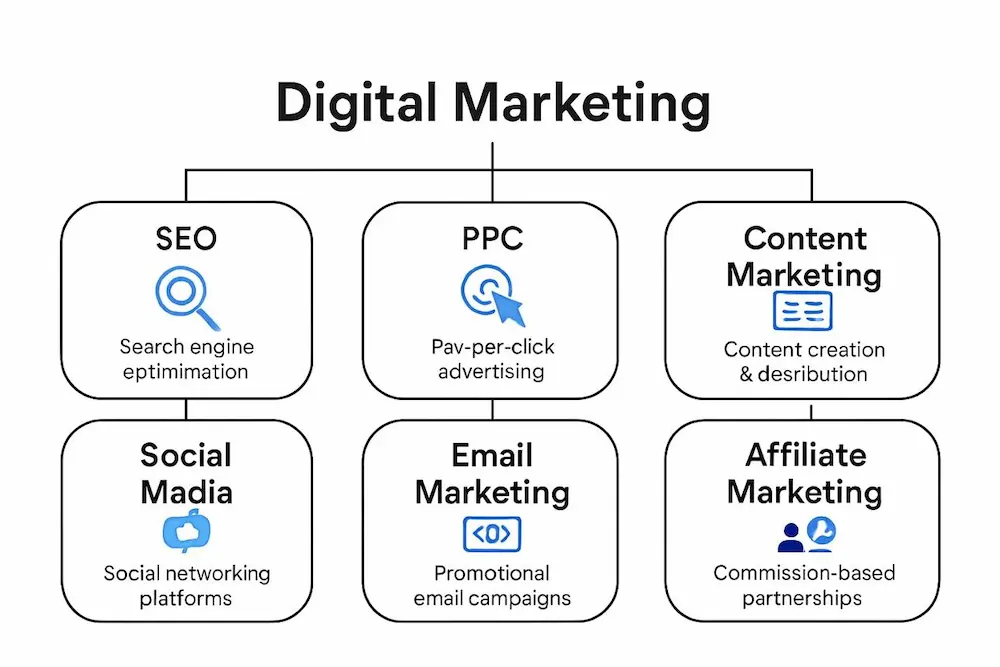
Digital marketing includes several specializations. Each one focuses on a different way of attracting, engaging, and converting customers.
1. Search Engine Optimization (SEO)
SEO involves improving a website so that its pages can appear more prominently in organic search engine results. It includes keyword research, content optimization, technical SEO, internal linking, and website improvements.
For example, if someone searches for “best running shoes for beginners,” a properly optimized article or product page may appear in the search results.
2. Social Media Marketing
Social media marketing involves using platforms such as Instagram, Facebook, TikTok, LinkedIn, and Pinterest to promote businesses and communicate with audiences.
A social media marketer may create posts, write captions, plan content calendars, respond to comments, and analyze engagement.
3. Content Marketing
Content marketing focuses on creating useful and relevant material to attract and educate a specific audience.
Common content formats include:
- Blog articles and website guides.
- Educational videos.
- Infographics and visual content.
- Social media posts.
- Downloadable guides and resources.
4. Email Marketing
Email marketing involves communicating with subscribers and potential customers through email.
Businesses use it to share newsletters, announce products, provide useful information, and encourage repeat purchases.
5. Paid Advertising (PPC)
Paid advertising involves paying platforms to display promotional content to selected audiences.
Common advertising channels include Google Ads, Facebook Ads, Instagram Ads, and YouTube Ads.
Businesses can use paid campaigns to generate website traffic, leads, and sales.
6. Affiliate Marketing
Affiliate marketing allows you to earn commissions by promoting another company’s products or services.
For example, you could publish a product review on your website and include an affiliate link. If a reader purchases through that link, you may receive a commission according to the affiliate program’s terms.
You don’t need to learn all six specializations immediately. Start with one that matches your interests and develop your skills before expanding into other areas.
Why Is Digital Marketing a Good Career Choice for Beginners?

Digital marketing has become an important part of how businesses attract customers and build their online presence. This creates opportunities for people who can develop practical marketing skills.
Here are some reasons why it can be a suitable career for beginners.
1. You Can Learn From Home
You don’t need to attend a physical institute or university to learn the fundamentals. Many educational platforms provide online lessons, tutorials, and practical exercises.
You can study at your own pace and practice whenever you have time.
2. Low Initial Investment
You can begin learning with a laptop or computer, an internet connection, and free educational resources.
Many beginner-friendly tools also offer free versions, so you don’t need to purchase expensive software immediately.
3. Multiple Career Opportunities
Digital marketing offers different career paths depending on your interests and abilities.
You could work as an SEO assistant, content writer, social media manager, email marketing specialist, or digital advertising assistant.
As your experience increases, you may move into more specialized or senior positions.
4. Freelancing Opportunities
You can offer digital marketing services to businesses without becoming a full-time employee.
For example, a local restaurant may need someone to manage its Instagram account, while an online store may need help improving its website content.
These projects can help you develop experience and build professional relationships.
5. Opportunities to Build Your Own Business
You can eventually use your marketing knowledge to grow your own website, online store, personal brand, or digital marketing agency.
Instead of always working for other businesses, you can apply your skills to your own projects.
What Skills Do You Need to Start Digital Marketing?
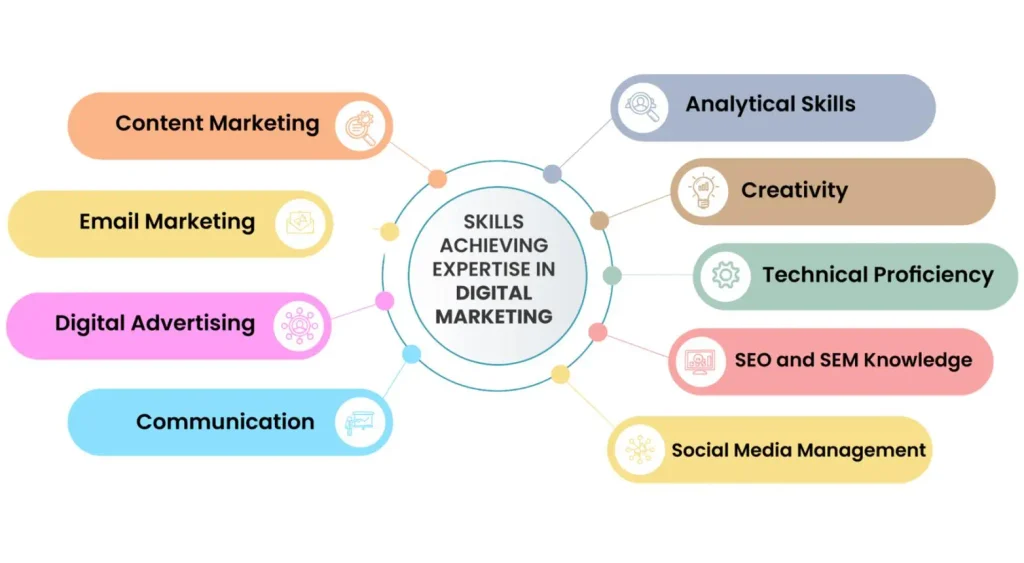
Before choosing a specialization, understand the basic skills that help digital marketers perform their work effectively.
You don’t need to be an expert in everything. However, developing these foundational abilities will make learning easier.
1. Communication Skills
Digital marketers communicate with clients, customers, team members, and audiences.
You should be able to explain ideas clearly, understand customer needs, and write messages that are easy to understand.
2. Basic Writing Skills
Writing is useful in SEO, content marketing, email marketing, and social media management.
You should learn how to write clear headlines, informative paragraphs, engaging captions, and helpful website content.
3. Research Skills
Research helps you understand your audience, competitors, keywords, and industry trends.
For example, before writing an article about fitness equipment, you should understand what readers are searching for and which questions they want answered.
4. Creativity
Creativity helps you develop interesting marketing campaigns, social media posts, advertisements, and content ideas.
You don’t need to be an artist. You need to understand how to communicate a message in an engaging way.
5. Analytical Thinking
Digital marketing involves measuring performance and making improvements.
You should gradually learn how to understand website traffic, engagement, conversion rates, and advertising performance.
6. Problem-Solving
Businesses hire marketers to solve problems such as low website traffic, poor social media engagement, and limited customer inquiries.
Learning how to identify problems and recommend practical solutions is an important professional skill.
Step 1: Understand the Basics of Digital Marketing
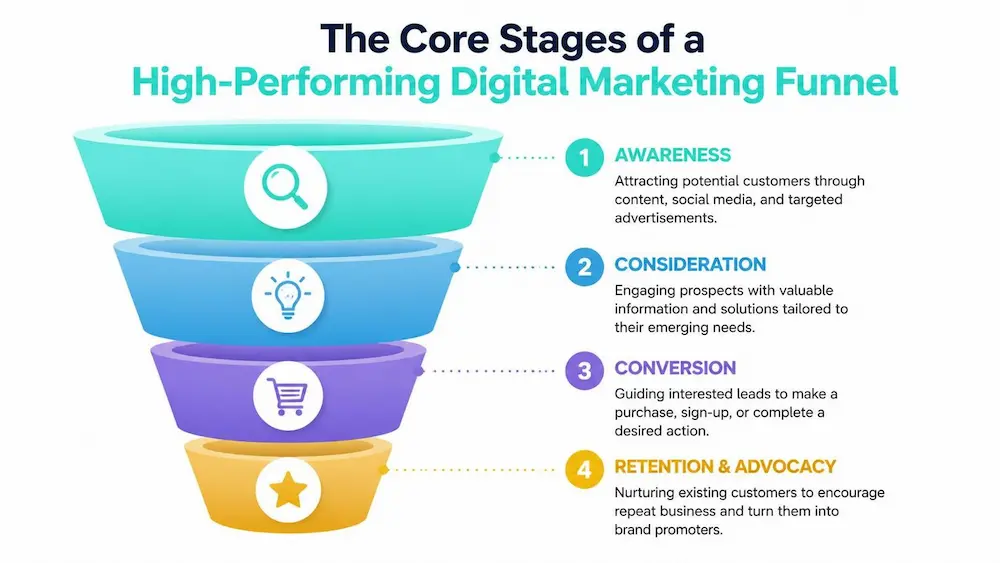
Your first step should be understanding how digital marketing works as a complete process.
Don’t immediately start learning advanced SEO techniques or advertising strategies. First, understand how businesses attract potential customers and turn their interest into sales.
Focus on these fundamental concepts:
- Target audience: The specific group of people a business wants to reach.
- Customer needs: The problems, interests, and expectations of potential customers.
- Marketing channels: The platforms businesses use to communicate with customers.
- Brand awareness: How familiar people are with a business or product.
- Lead generation: The process of attracting potential customers and collecting their interest.
- Conversion: A desired action, such as purchasing a product, booking a service, or submitting a form.
- Marketing strategy: A plan for achieving specific business goals through marketing activities.
For example, imagine a company selling skincare products online.
Its target audience might include people interested in skincare. It could publish educational blog posts, create Instagram videos, and run advertisements to introduce its products.
Someone might discover the brand through a Google search, visit its website, subscribe to its newsletter, and eventually make a purchase.
Understanding this customer journey will help you understand why different digital marketing channels work together.
Step 2: Choose One Digital Marketing Skill
One of the biggest mistakes beginners make is trying to learn every marketing skill simultaneously.
They start SEO tutorials, switch to Facebook advertising, watch email marketing videos, and then move to affiliate marketing.
This creates confusion and prevents them from developing expertise.
Instead, choose one specialization based on your interests.
| If you enjoy… | Start learning… |
| Writing and research | SEO and content writing |
| Creativity and online communication | Social media marketing |
| Working with numbers | Analytics and paid advertising |
| Communication and relationship building | Email marketing |
| Photography and video | Video marketing |
| Promoting products | Affiliate marketing |
Which Digital Marketing Skill Is Best for Beginners?
There isn’t one perfect skill for everyone. Your choice should depend on your interests, learning preferences, and career goals.
However, SEO and social media management can be practical starting points because you can practice many of their basic activities without paying for advertisements.
SEO is suitable if:
- You enjoy writing and research.
- You like working with websites.
- You are interested in Google search results.
- You can be patient with long-term improvements.
Social media marketing is suitable if:
- You enjoy creating content.
- You understand social media platforms.
- You like communicating with people.
- You enjoy planning creative campaigns.
Choose one skill and spend enough time practicing it before moving to another specialization.
Step 3: Set Up Your Home Workspace

You don’t need a professional office to become a digital marketer. A simple and organized workspace is enough.
Here is what you need:
1. Laptop or Computer
A laptop or desktop computer will help you research keywords, write articles, create graphics, manage websites, and analyze marketing performance.
A powerful computer is not necessary for most beginner-level tasks.
2. Stable Internet Connection
You will need internet access for online courses, research, communication, and marketing tools.
3. Google Account
A Google account gives you access to useful productivity tools such as Google Docs and Google Sheets.
4. A Quiet Workspace
Choose a comfortable place where you can focus on learning and completing projects without unnecessary distractions.
5. A Learning Schedule
Set aside one or two hours daily if possible.
A consistent schedule will help you develop skills more effectively than studying for several hours occasionally and then stopping for days.
Step 4: Learn Digital Marketing With Free Online Courses

You don’t need to spend money on expensive courses when you’re starting.
Several reputable educational platforms offer beginner-friendly training.
1. Google Skillshop
Google provides training through Skillshop, including its Fundamentals of Digital Marketing course.
You can explore topics such as digital strategy, customer behavior, search, social media, video, and analytics.
The training includes practical examples and learning modules that help beginners understand different areas of online marketing.
Visit Google Skillshop to explore available training.
2. HubSpot Academy
HubSpot Academy offers a free Digital Marketing Certification Course covering important subjects such as SEO, content marketing, email marketing, social media, lead generation, and reporting.
It is useful for beginners who want a structured introduction to digital marketing.
You can access the HubSpot Academy digital marketing course.
3. Google Search Central
If you decide to specialize in SEO, Google’s official documentation is an important learning resource.
It explains how Google Search works and provides guidance on creating helpful content, improving website accessibility for search engines, and understanding SEO fundamentals.
Start with the Google SEO Starter Guide.
4. Learn Through YouTube Tutorials
YouTube can help you understand practical marketing activities through demonstrations and tutorials.
You can search for lessons about:
- Keyword research for beginners.
- On-page SEO.
- WordPress website management.
- Social media content creation.
- Google Analytics basics.
- Email marketing campaigns.
- Facebook and Instagram marketing.
Try to follow one structured learning path instead of jumping between unrelated videos.
Important tip: Completing a course does not automatically make you a professional digital marketer. Courses provide knowledge, but practical experience develops your ability to perform actual marketing tasks.
Step 5: Practice Digital Marketing on Your Own Projects

This is one of the most important steps if you have no professional experience.
You might think that businesses will not hire you because you have never worked with a client. However, you can develop practical experience through personal projects.
You don’t have to wait for someone to give you your first opportunity.
Project 1: Start a Small Blog
Create a blog around a topic you understand or enjoy.
Possible topics include:
- Technology.
- Fitness and health.
- Personal finance.
- Education.
- Business.
- Lifestyle.
Write useful articles and practice keyword research, content optimization, internal linking, and website management.
If you choose SEO, this is one of the best ways to understand how websites work.
Project 2: Create a Social Media Page
Choose a niche and create an Instagram, Facebook, or TikTok page.
For example, you could create a page about healthy recipes.
Practice:
- Designing social media posts.
- Writing captions.
- Creating short videos.
- Using relevant hashtags.
- Planning a weekly content calendar.
- Reviewing engagement and audience activity.
Track your results to understand which content performs better.
Project 3: Create a Sample Marketing Campaign
Choose an imaginary or real business and prepare a basic marketing campaign.
For example, imagine a local coffee shop that wants to attract more customers.
You could create:
- A seven-day social media content calendar.
- Five promotional post designs.
- Three short video concepts.
- A customer-focused promotional message.
- A simple performance measurement plan.
This project will demonstrate that you understand how to plan marketing activities.
Project 4: Help a Small Business
You can also approach a friend, family member, or local business owner who needs help with their online presence.
Offer to complete a small, clearly defined project.
For example, you could prepare a content calendar, improve website headings, or create a few social media graphics.
Agree on the scope and duration beforehand. If you work without payment to gain experience, keep the arrangement limited rather than providing unlimited free services.
Step 6: Learn Essential Digital Marketing Tools
Digital marketers use different tools to research, create, manage, and measure their marketing activities.
You don’t need to learn every tool immediately. Start with a small collection that supports your chosen specialization.
Essential Tools for Beginners
| Tool | Main purpose |
| Google Analytics | Understand website traffic and user behavior |
| Google Search Console | Monitor search performance and indexing |
| Canva | Design graphics and social media content |
| Google Docs | Write and organize content |
| Google Sheets | Track keywords, campaigns, and tasks |
| Meta Business Suite | Manage Facebook and Instagram content |
| WordPress | Create and manage websites |
| Mailchimp | Manage email marketing campaigns |
How to Choose the Right Tools
Your tools should match the service you want to provide.
For example, an SEO beginner should prioritize Google Search Console, Google Analytics, and keyword research tools.
A social media beginner should focus on Canva, Meta Business Suite, and basic analytics.
Avoid purchasing expensive subscriptions before understanding what you actually need.
Free versions are usually sufficient for your first practice projects.
Step 7: Build a Professional Digital Marketing Portfolio
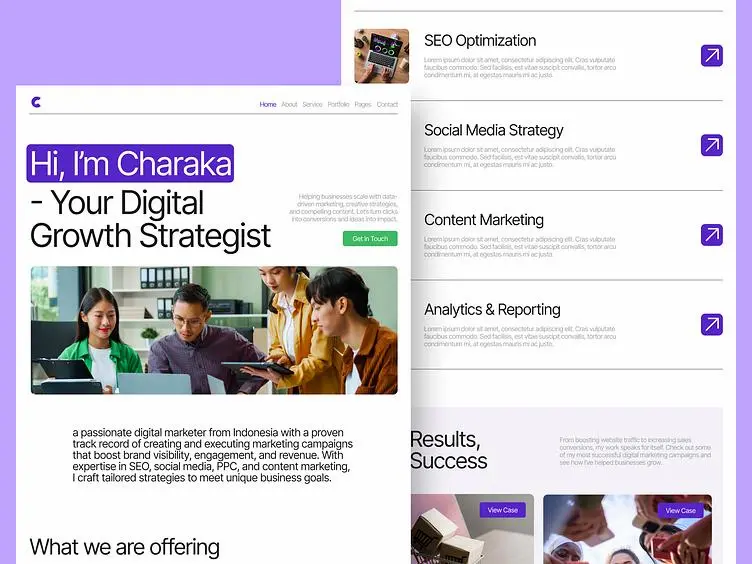
A portfolio is a collection of projects that demonstrates your skills and abilities.
When you have no professional experience, it helps potential clients and employers understand what you can do.
You don’t need dozens of projects. Start with three to five relevant examples.
What Should Your Portfolio Include?
1. About Me
Write a short introduction explaining your specialization, skills, and the type of projects you can handle.
2. Your Practical Projects
Include examples of work you have completed, such as blog articles, social media designs, keyword research, or content calendars.
3. Project Goals
Explain what each project was designed to achieve.
For example, your goal might be to improve a website’s content structure or create a consistent social media publishing schedule.
4. Your Process
Describe the steps you followed to complete the project.
This demonstrates that you understand the work rather than simply presenting screenshots.
5. Results and Performance
Include measurable results when available.
For example:
- Number of articles published.
- Search impressions and clicks.
- Social media engagement.
- Website traffic changes.
- Email subscribers gained.
If you don’t have performance results yet, clearly label the work as a sample project.
Never invent statistics, client names, or achievements.
Where Can You Create Your Portfolio?
You can build a simple portfolio using:
- A personal WordPress website.
- A professional LinkedIn profile.
- A Google Drive folder.
- A simple online portfolio page.
Keep your portfolio organized and make it easy for potential clients to understand your services.
Step 8: Create Your First Digital Marketing Service

Once you have developed a basic skill and completed a few practice projects, decide what service you want to offer.
Don’t simply advertise yourself as someone who does everything in digital marketing.
A specific service is easier for potential clients to understand.
Here are some beginner-friendly service ideas.
SEO Services
You could offer:
- Keyword research.
- Basic on-page SEO.
- Meta title and description optimization.
- Content optimization.
- Internal linking suggestions.
- SEO content writing.
Social Media Services
You could offer:
- Social media post creation.
- Caption writing.
- Content calendar preparation.
- Basic account management.
- Short-form video planning.
- Engagement monitoring.
Content Marketing Services
You could offer:
- Blog writing.
- Article editing.
- Topic research.
- Content planning.
- Website content optimization.
- Blog content updates.
Email Marketing Services
You could offer:
- Newsletter writing.
- Email campaign planning.
- Basic email automation setup.
- Subscriber list organization.
- Email performance reporting.
Start with one clearly defined service and expand your offerings as your experience grows.
Step 9: Find Your First Digital Marketing Client
Getting your first client can feel difficult, especially when you have no professional background.
However, you don’t need to approach large companies immediately.
Small businesses, independent professionals, online stores, and local service providers may need help improving their online marketing.
Here are practical ways to find potential clients.
1. Use Freelance Platforms
Freelance platforms connect businesses with people offering professional services.
You can create profiles on platforms such as Upwork and Fiverr.
Start with one specific service instead of listing every marketing skill.
For example:
“SEO Content Optimization for Small Business Websites”
Your profile should explain:
- What service you provide.
- Which problems you can help solve.
- What your process looks like.
- Examples of your work.
- How clients can contact you.
2. Contact Local Businesses
Look for businesses with an incomplete website, inconsistent social media activity, or poorly organized online content.
Don’t send generic messages to hundreds of businesses.
First, review their online presence and identify one genuine opportunity for improvement.
Then send a personalized message explaining how you could help.
3. Use LinkedIn
LinkedIn can help you connect with business owners, marketing professionals, agencies, and recruiters.
Create a professional profile, describe your specialization, and publish useful content related to your work.
You can also apply for entry-level digital marketing opportunities.
4. Apply for Internships and Remote Jobs
If you prefer working with an established company, look for positions such as:
- Digital Marketing Intern.
- SEO Assistant.
- Content Marketing Assistant.
- Social Media Assistant.
- Junior Digital Marketing Executive.
- Email Marketing Assistant.
These positions can provide valuable experience working with real marketing campaigns and professional teams.
Example Message to Approach Your First Client
You can use this simple outreach structure:
“Hi, I came across your business and noticed that there may be opportunities to improve your online presence. I specialize in [your service] and would be happy to share a few practical suggestions that could help your business. Here is a sample of my work: [portfolio link]. Please let me know if you’re interested in discussing it.”
Personalize every message. Avoid promising guaranteed rankings, sales, or follower growth.
How Much Can You Earn From Digital Marketing at Home?
One of the biggest reasons people learn digital marketing is the opportunity to earn money online.
However, your income will depend on several factors, including:
- Your specialization.
- Practical experience.
- Quality of your work.
- Location and target market.
- Type of clients.
- Project complexity.
- Ability to communicate and deliver results.
There is no guaranteed income for beginners.
1. Freelancing
Freelancing allows you to provide marketing services to different clients.
You might work on individual projects or offer monthly services.
For example, a social media freelancer could manage content creation and scheduling for a small business.
2. Remote Digital Marketing Jobs
You can work remotely for a company or marketing agency.
Your responsibilities may include writing content, conducting research, managing campaigns, or analyzing marketing performance.
3. Affiliate Marketing
You can promote relevant products and earn commissions from qualifying purchases.
However, affiliate marketing requires audience trust, useful content, and a strategy for attracting visitors.
It may take time before you generate consistent commissions.
4. Blogging
You can create a website and publish useful articles that attract visitors from search engines and other channels.
Potential monetization methods include advertising, affiliate commissions, sponsored content, and selling your own products.
Blogging is generally a long-term project rather than a quick way to earn money.
5. Starting a Digital Marketing Agency
After gaining experience and developing relationships with clients, you may decide to build a small agency.
You could offer services such as SEO, social media management, content marketing, and paid advertising.
However, it is better to understand client management, service delivery, and marketing strategy before expanding into an agency.
How Should Beginners Set Their Prices?
Start by researching the market for your specific service.
Consider the time required, complexity of the work, client expectations, and the value you provide.
You might begin with a small, clearly defined project to demonstrate your ability.
As your portfolio, experience, and results improve, you can adjust your pricing.
Remember that the goal is not simply to charge less than everyone else. It is to deliver reliable work that solves a real business problem.
Common Mistakes Beginners Should Avoid
Learning digital marketing becomes easier when you understand the mistakes that slow down progress.
1. Trying to Learn Everything at Once
SEO, social media, email marketing, and advertising are different specializations.
Trying to master them all simultaneously can create confusion.
Choose one primary skill and develop it first.
2. Watching Tutorials Without Practicing
Watching educational videos can help you understand concepts, but it does not prove that you can perform the work.
After every lesson, complete a practical exercise.
For example, after learning keyword research, create a keyword list for a sample website.
3. Expecting Immediate Income
Digital marketing is not a guaranteed shortcut to making money online.
You need time to develop skills, complete projects, build a portfolio, and establish trust with clients.
Focus on improving your abilities rather than expecting immediate financial results.
4. Buying Too Many Courses and Tools
Beginners sometimes spend money on multiple courses and subscriptions without completing their learning.
Start with reputable free resources and purchase additional training only when you understand what you need.
5. Ignoring Analytics
Publishing content or running campaigns is only part of marketing.
You also need to understand whether your activities are producing useful results.
Learn how to measure performance and make improvements based on evidence.
6. Copying Other People’s Work
Copying articles, graphics, or marketing campaigns will not help you develop professional skills.
Study successful examples, understand why they work, and create your own original work.
7. Giving Up Too Early
Your first project may not produce impressive results. Your first client outreach message may receive no response.
That is part of learning.
Review your approach, improve your skills, and continue working toward measurable goals.
A Practical 90-Day Digital Marketing Learning Plan
If you’re starting from zero, a 90-day plan can help you organize your learning and avoid unnecessary distractions.
The objective is to move from basic knowledge to practical experience and a beginner portfolio.
Days 1–30: Learn the Fundamentals
Main goal: Understand digital marketing and choose one specialization.
During the first month:
- Learn the basic concepts of digital marketing.
- Understand target audiences and customer journeys.
- Explore SEO, social media, content, and email marketing.
- Choose one skill to specialize in.
- Complete a beginner-friendly online course.
- Learn the basic tools related to your chosen skill.
Expected outcome: You understand the fundamentals and have selected one area to develop.
Days 31–60: Develop Practical Experience
Main goal: Apply your knowledge through real projects.
During the second month:
- Create a personal website or social media page.
- Complete keyword research or content planning exercises.
- Publish original content.
- Practice using relevant marketing tools.
- Create a sample campaign.
- Track your activities and results.
- Improve your work based on what you learn.
Expected outcome: You have practical projects that demonstrate your developing skills.
Days 61–90: Build Your Portfolio and Find Opportunities
Main goal: Prepare to work with clients or employers.
During the final month:
- Organize three to five portfolio examples.
- Create a professional LinkedIn profile.
- Set up freelance profiles if relevant.
- Identify businesses that may need your services.
- Send personalized client outreach messages.
- Apply for internships and entry-level positions.
- Practice explaining your work and process.
Expected outcome: You have a basic portfolio, a clear service offering, and a structured approach to finding your first professional opportunity.
Daily Learning Schedule for Beginners
You can follow this simple routine if you have approximately two hours available each day.
| Activity | Time |
| Learn new concepts | 30 minutes |
| Watch practical tutorials | 20 minutes |
| Complete hands-on exercises | 50 minutes |
| Review progress and take notes | 20 minutes |
| Total | 2 hours |
You can adjust the schedule according to your availability.
The important thing is to spend more time applying what you learn than simply consuming educational content.
Conclusion
Starting digital marketing from home with no experience is a realistic career goal, but it requires patience, consistent learning, and practical work.
You don’t need to master every marketing specialization or purchase expensive tools before beginning. Start by understanding the fundamentals, choose one skill, and use free educational resources to build your knowledge.
Then apply what you learn through personal projects, develop a professional portfolio, and gradually look for freelance clients, internships, or remote job opportunities.
Remember that practical experience is what turns knowledge into a valuable professional skill.
Follow the 90-day learning plan, measure your progress, and improve your work with every project.
Your first step doesn’t have to be complicated. Choose one digital marketing skill today, complete your first lesson, and start building your first practical project.
Frequently Asked Questions
Can I Learn Digital Marketing on My Phone?
Yes, you can learn basic digital marketing using a smartphone. However, a laptop makes professional tasks like SEO research, website management, content creation, and analytics easier to manage.
Is Digital Marketing Difficult to Learn?
Digital marketing is not difficult if you learn step by step. Start with basic concepts, follow beginner-friendly courses, practice regularly, and gradually develop the skills needed to manage real marketing projects.
Do I Need a Degree to Become a Digital Marketer?
No, a university degree is not always necessary. Many employers and clients value practical experience, technical knowledge, communication skills, and a portfolio demonstrating your ability to complete digital marketing tasks.
Which Digital Marketing Skill Should I Learn First?
SEO and social media marketing are good starting options. Choose SEO if you enjoy research and writing, or social media marketing if you prefer content creation, creativity, and audience engagement.
Can I Work With International Clients From Home?
Yes, you can work with international clients remotely. Build a professional portfolio, create freelance profiles, use LinkedIn, and communicate effectively to find opportunities with businesses in different countries.