
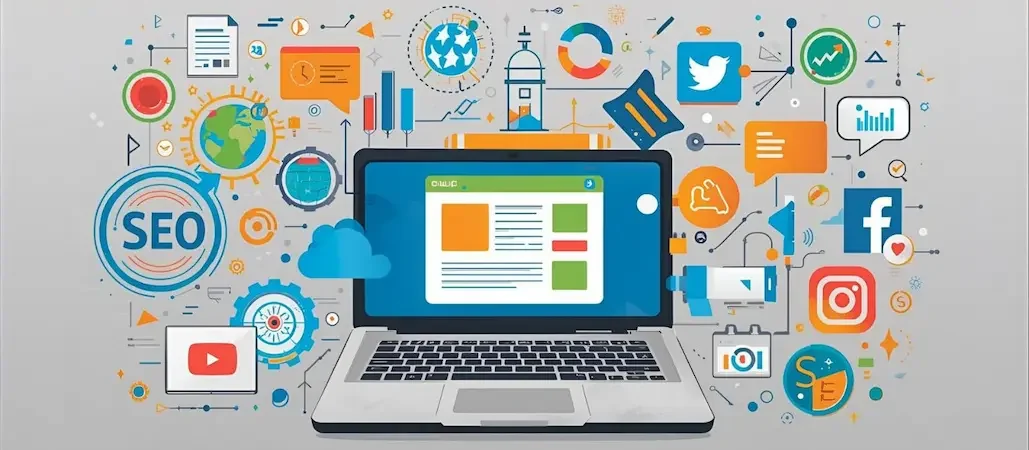
Every day, people search on Google, scroll through Instagram, watch YouTube videos, and read emails on their phones. Businesses know this, so they go where their customers already spend time. That is the simple idea behind digital marketing.
Digital marketing is the practice of promoting a product, service, or brand using the internet and digital devices. It includes things like websites, search engines, social media, email, online ads, and videos. If a business reaches you through a screen, that is digital marketing.
In this guide, you will learn what digital marketing means, why it matters, the main types, how it works step by step, and how you can get started. Everything is explained in simple words, so you can follow along even if you are a complete beginner.
What Is Digital Marketing?
Digital marketing means using online channels to connect with people who might want what you sell. Those channels can be search engines, social media platforms, email, websites, mobile apps, and video platforms.
The goal is the same as any marketing: get the right message to the right person at the right time. The difference is that digital marketing lets you do this with much more precision. You can choose who sees your message based on their age, location, interests, and even what they searched for yesterday.
A small bakery that posts cake photos on Instagram is doing digital marketing. So is a large software company that runs Google ads and sends weekly newsletters. The tools change with the size of the business, but the idea stays the same.
Why Digital Marketing Matters Today
Most buying journeys now begin online. Before people visit a shop or call a company, they usually search, read reviews, and compare options. If your business is not visible online, you are missing the first and most important step.
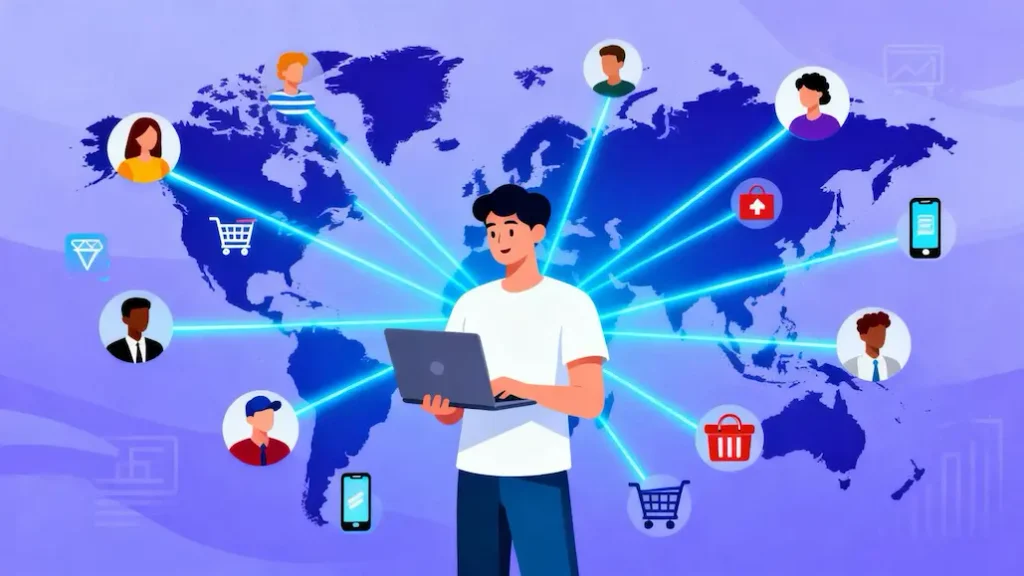
Here are the main reasons digital marketing matters:
- Wide reach: You can reach people in your city or across the world.
- Lower cost: You can start with a small budget and grow slowly.
- Targeting: You can show your message only to people likely to be interested.
- Measurable results: You can see clicks, sales, and sign-ups in real numbers.
- Two-way contact: Customers can comment, message, and share, so you can talk with them directly.
- Fast changes: If something is not working, you can fix it in a day instead of waiting weeks.
Digital Marketing vs. Traditional Marketing
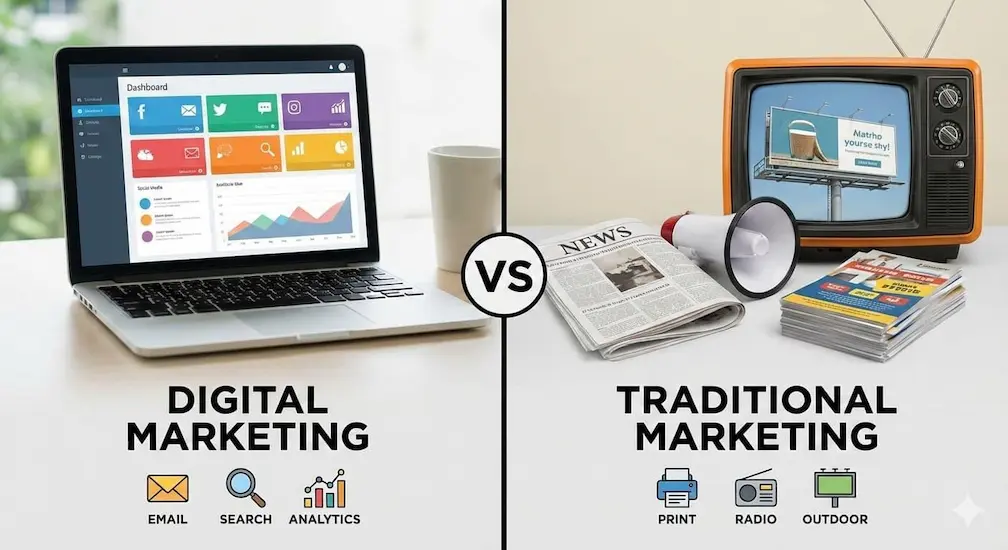
Traditional marketing includes TV ads, radio, newspapers, billboards, and flyers. These still work in some cases, but they are harder to measure and often cost more. The table below shows the main differences.
| Point | Digital Marketing | Traditional Marketing |
| Cost | Flexible, can start very small | Usually higher upfront cost |
| Targeting | Very specific audiences | Broad audiences |
| Tracking | Real-time data and reports | Hard to measure exactly |
| Interaction | Two-way (comments, messages) | Mostly one-way |
| Speed of change | Edit or stop anytime | Slow and costly to change |
| Reach | Local to global | Mostly local or regional |
Many smart businesses use both. For example, a shop may keep a local billboard while also running social media ads that point to its website.
Main Types of Digital Marketing
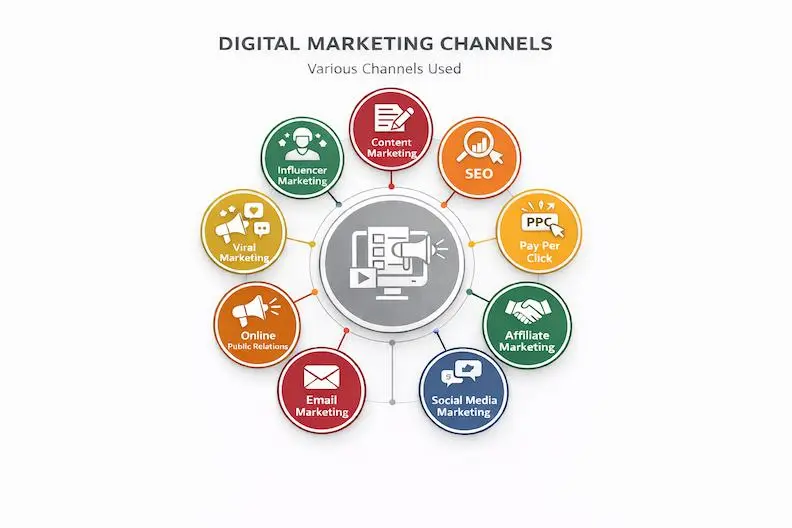
Digital marketing is not one single thing. It is a group of methods that work best when used together. Here are the most important ones.
Search Engine Optimization (SEO). SEO is the work of improving your website so it appears higher in search results without paying for each click. It involves useful content, good page structure, fast loading, and trustworthy links. Google explains the basics clearly in its SEO Starter Guide, which is a good place for beginners.
Content Marketing. This means creating helpful articles, videos, guides, and podcasts that answer the questions your audience has. Instead of pushing a sale, you build trust first. The Content Marketing Institute shares many practical examples and training resources.
Social Media Marketing. You build a presence on platforms like Facebook, Instagram, LinkedIn, TikTok, and X. You share posts, stories, and videos, and you talk with followers.
Pay-Per-Click (PPC) Advertising. You pay for ads on search engines or social platforms, and you are charged when someone clicks. It is a fast way to get visitors while your SEO grows.
Email Marketing. You collect email addresses and send useful updates, offers, and stories. It remains one of the best ways to keep in touch with customers.
Affiliate Marketing. Other people promote your product and earn a commission for each sale they bring in.
Influencer Marketing. You work with creators who already have the trust of a certain audience.
Video Marketing. You use platforms like YouTube and short-video apps to show your product, teach something, or tell your story.
Digital Marketing Channels at a Glance
Choosing the right channel depends on your goal and your audience. This table gives a quick comparison.
| Channel | Best For | Speed of Results | Cost Level |
| SEO | Long-term traffic | Slow (months) | Low to medium |
| Content marketing | Trust and education | Slow to medium | Low to medium |
| Social media | Awareness and community | Medium | Low |
| PPC ads | Quick leads and sales | Fast | Medium to high |
| Email marketing | Repeat customers | Fast | Low |
| Affiliate marketing | Sales growth | Medium | Pay per sale |
| Influencer marketing | Brand trust | Medium | Varies widely |
How Digital Marketing Works Step by Step
Digital marketing may look confusing from the outside, but the process is fairly simple when you break it down.
- Step 1: Set a clear goal. Decide what you want, such as more website visitors, more email sign-ups, or more sales.
- Step 2: Know your audience. Write down who your customers are, what they need, and where they spend time online.
- Step 3: Pick your channels. Start with one or two that match your audience instead of trying everything at once.
- Step 4: Create useful content. Make posts, pages, videos, or ads that solve a real problem.
- Step 5: Publish and promote. Put your content in front of people using search, social media, email, or ads.
- Step 6: Measure the results. Check what worked and what did not.
- Step 7: Improve. Keep the good parts, change the weak parts, and repeat.
This cycle never really ends. The best marketers keep testing and learning.
Key Parts of a Good Digital Marketing Strategy
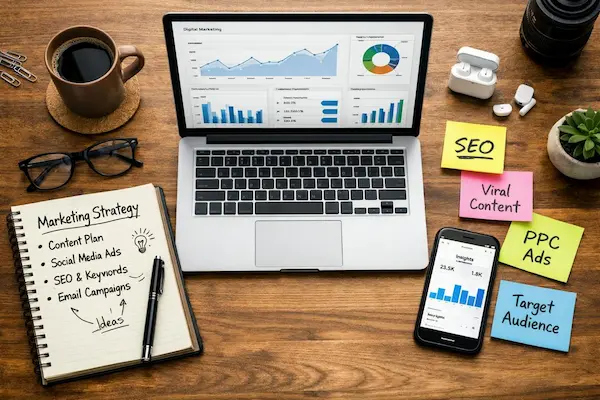
A strategy is your plan. Without one, you may post often and still see no results. A good plan usually has these parts:
- A clear target audience: You know exactly who you are talking to.
- A strong message: People quickly understand what you offer and why it helps them.
- A simple website: It loads fast, works on phones, and makes it easy to contact you or buy.
- A content plan: You know what to publish and when.
- A budget: Even a small one, so you know how much you can spend.
- Tracking tools: You can see what is happening. Free tools like Google Analytics show where your visitors come from and what they do on your site.
Important Digital Marketing Metrics to Track
Numbers tell you whether your work is paying off. You do not need to track everything. Start with the ones that connect to your goal.
| Metric | What It Tells You |
| Website traffic | How many people visit your site |
| Click-through rate (CTR) | How many people click after seeing your ad or link |
| Conversion rate | How many visitors take the action you want |
| Cost per click (CPC) | How much you pay for each ad click |
| Cost per acquisition (CPA) | How much it costs to win one customer |
| Return on investment (ROI) | How much you earn compared with what you spend |
| Email open rate | How many people open your emails |
| Engagement rate | How much people like, comment, and share |

Benefits of Digital Marketing for Businesses
When done well, digital marketing helps businesses of every size. The main benefits are:
- It helps new customers find you.
- It builds trust through helpful content and reviews.
- It gives you control over your budget.
- It lets small businesses compete with bigger ones.
- It shows you what customers like through real data.
- It keeps you connected with past customers so they buy again.
Common Challenges and Mistakes
Digital marketing is powerful, but it is not magic. Beginners often run into the same problems.
- Trying to be everywhere: Spreading yourself across many platforms leads to weak results. Master one or two first.
- Having no clear goal: If you do not know what success looks like, you cannot measure it.
- Ignoring mobile users: Most people browse on phones, so your site must work well on small screens.
- Copying others: What works for another brand may not suit yours.
- Expecting instant results: SEO and content marketing take time, often several months.
- Not checking the data: Guessing wastes money. Look at your numbers regularly.
- Selling too hard: People ignore content that sounds like a constant sales pitch.
Skills You Need to Work in Digital Marketing
Digital marketing is also a popular career. You do not need a special degree to start, but you do need to build practical skills.
- Writing clear and helpful content
- Basic SEO knowledge
- Understanding social media platforms
- Reading and explaining data
- Basic design and video editing
- Curiosity and willingness to keep learning, since tools and trends change quickly
Many people begin by running a small blog, a social page, or a small online project. That hands-on practice teaches more than reading alone.
How to Get Started with Digital Marketing

If you are new, here is a simple path you can follow:
- Learn the basics. Read beginner guides and take free courses.
- Pick one channel. Social media, SEO, or email are good starting points.
- Build a small project. Start a blog, a business page, or help a local shop.
- Post and test. Publish regularly and notice what people respond to.
- Track your results. Use free analytics tools to see what is working.
- Keep improving. Update what you do every month based on what you learn.
You do not need a big budget. Time, consistency, and a willingness to learn matter far more at the start.
The Future of Digital Marketing
Digital marketing keeps changing. Artificial intelligence now helps with writing, ad testing, and customer support. Short videos, voice search, and personalized messages are becoming more common. Privacy is also a bigger topic, so businesses need to be honest about how they collect and use data.
While the tools will change, one thing will stay the same: people trust brands that are helpful, clear, and honest. Marketers who focus on real value will do well no matter which platform is popular.
Conclusion
Digital marketing is simply the art of reaching people online with something useful. It covers search, social media, email, ads, video, and more, and it gives businesses a clear and affordable way to grow. The key is to start small, choose the channels that fit your audience, create helpful content, and learn from your numbers.
Whether you want to promote your own business or build a career, the best step is to begin today. Pick one channel, make one useful piece of content, and see what happens. Over time, small steps add up to real results.
Frequently Asked Questions
What is digital marketing in simple words?
It is promoting a product or service using the internet, such as through search engines, social media, email, and online ads.
What are the 5 main types of digital marketing?
The five most common are SEO, content marketing, social media marketing, pay-per-click advertising, and email marketing.
Is digital marketing a good career?
Yes. Demand for people with these skills is strong, and you can work for a company, an agency, or yourself.
How much money do I need to start?
You can start for almost nothing by using free social platforms and free tools. Paid ads can be added later.
How long does digital marketing take to work?
Paid ads can bring visitors within days. SEO and content usually take three to six months or more to show strong results.